
©
Every spring, Korea celebrates Buddha’s
Birthday with a spectacular cultural event known as the Lotus Lantern Festival.
Regardless of religion, travelers from around the world find this season to be
one of the most memorable times to visit the country. The celebration offers a
unique combination of visual beauty, hands-on cultural experiences, and a
welcoming atmosphere that transcends generations and nationalities.
© hallyuism
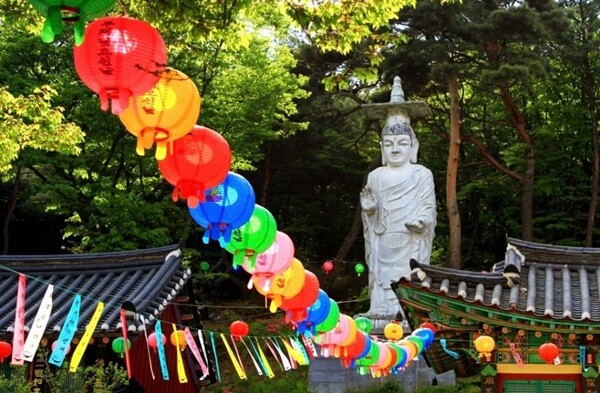
Buddha’s Birthday, celebrated on the 8th
day of the 4th lunar month, is a national holiday in Korea. On this day,
temples across the country host special services and illuminate their grounds
with colorful paper lanterns in honor of the Buddha’s birth.
One of the most significant events tied to
this holiday is Yeondeunghoe, or the Lotus Lantern Festival. Though originally
a Buddhist religious ceremony, it has evolved into a major cultural event that
welcomes both locals and international visitors.
The Lotus Lantern Festival traces its roots
back over 1,200 years to the Silla Dynasty. It has long been regarded as a key
part of Korea’s traditional Buddhist culture. In recent decades, the festival
has expanded into a large-scale public celebration, blending spiritual practice
with modern cultural elements. In recognition of its value, UNESCO inscribed it
on the Representative List of the Intangible Cultural Heritage of Humanity in
2020.
© Seoul Metropolitan Government
Foreign visitors are increasingly drawn to
the Lotus Lantern Festival, not only for its beauty but also for its
inclusivity and interactive nature. According to data from the Jogye Order’s
planning team, only about 100 foreigners participated when the festival was
formalized in 1996. That number has grown significantly over the years,
reaching over 30,000 in recent editions.
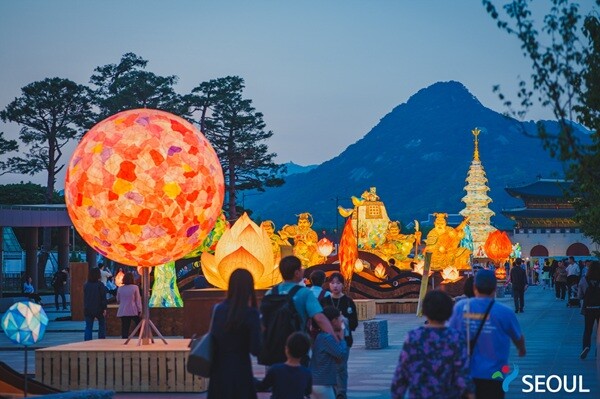
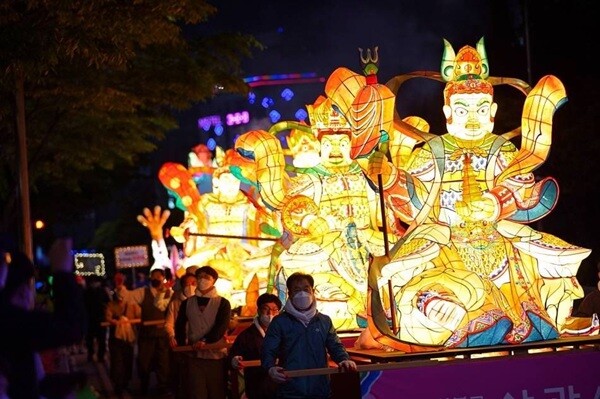
The visual impact of the event is one of
its strongest attractions. Lanterns of all shapes, colors, and sizes decorate
streets, temples, and public squares. Grand lantern floats—often in the shape
of dragons, lotus flowers, or Buddhas—create a magical nighttime scene during
the main parade.
© Visit Korea
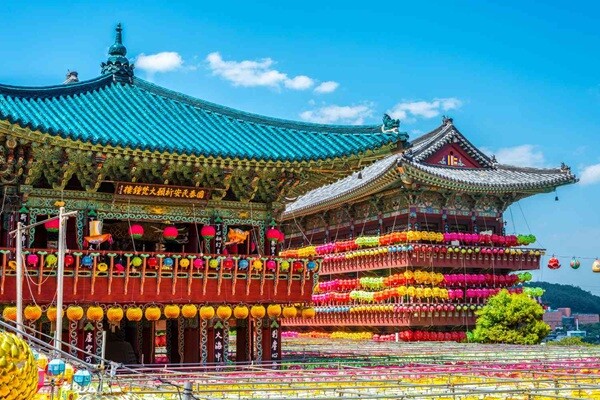
Equally important is the participatory
nature of the festival. Unlike many cultural events where the audience is
limited to observing, the Lotus Lantern Festival encourages direct involvement.
Foreigners can make their own lanterns, take part in traditional games, join
the parades, or even volunteer. Many visitors note that the chance to be a true
participant—regardless of age, background, or ethnicity—is one of the festival’s
most appealing qualities.
© Visit Korea
The festival also provides access to a
range of traditional Korean cultural experiences. Activities such as tea
ceremonies, meditation sessions, and performances in traditional dress help
deepen understanding of both Korean heritage and Buddhist traditions.
Recommended Places to Experience the
Festival
Seoul Lantern Parade
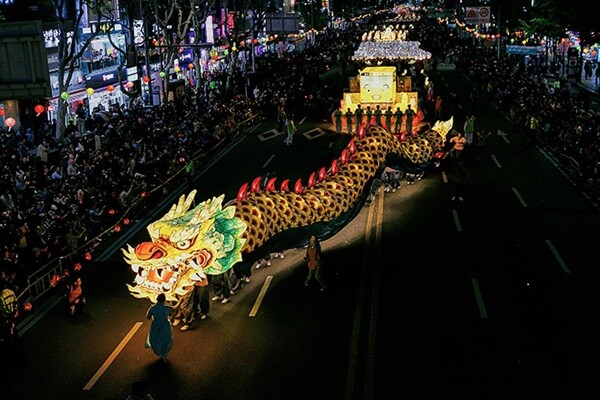
© Korea Net
The main parade is one of the most iconic parts of the festival. Thousands of
glowing lanterns proceed from Heunginjimun (Dongdaemun Gate) to Jonggak
Station, accompanied by traditional music and dance.
📍 Heunginjimun
Gate to Jonggak Station, Seoul
🗓️ April
26, 7 PM
Jogyesa Temple (Seoul)
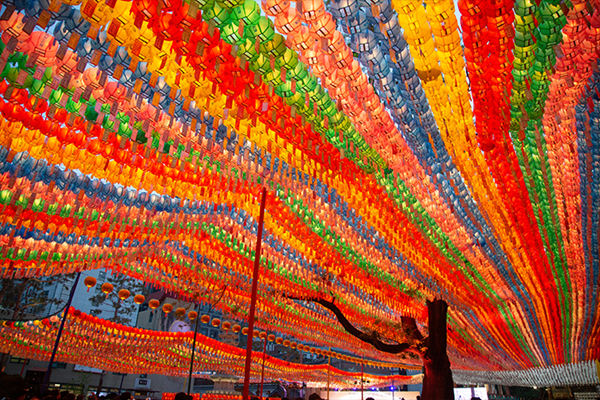
© Seoul Metropolitan Government
Located in central Seoul, Jogyesa is one of the most accessible places to
experience the festival. Visitors can enjoy lantern displays, cultural booths,
and temple ceremonies.
📍 55
Ujeongguk-ro, Jongno-gu, Seoul
🗓️ Late
April to early May
Samgwangsa Temple (Busan)
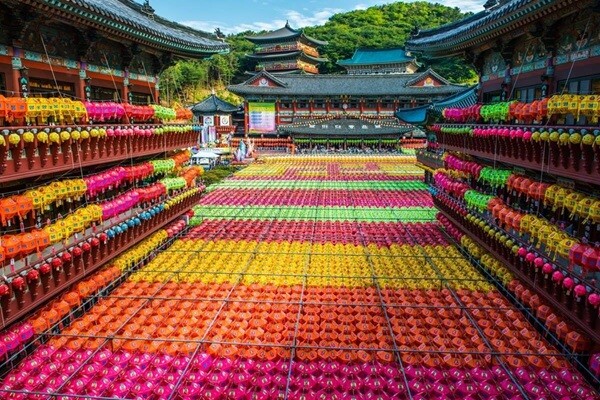
© Visit Korea
This hillside temple is known for its breathtaking lantern arrangements. It is
often ranked among the most beautiful festival spots in Korea.
📍 77
Choeupcheon-ro 43beon-gil, Busanjin-gu, Busan
🗓️ April
12 – May 6
Jeonju Hanok Village
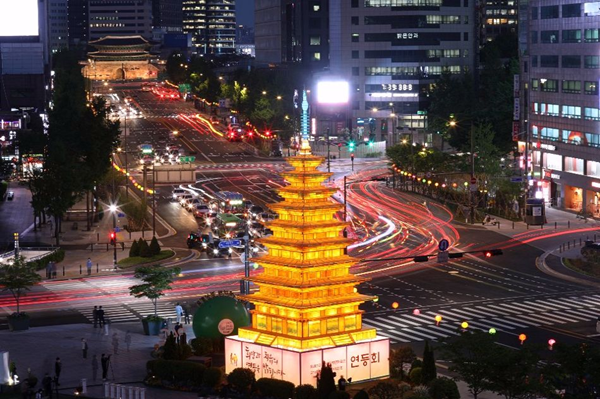
© Visit Korea
This location offers a unique experience by combining the festival’s lanterns
with the traditional architecture of a Korean hanok village.
📍 99
Girin-daero, Wansan-gu, Jeonju
🗓️ April
26
The Lotus Lantern Festival is more than a
religious celebration—it is a vibrant cultural event that brings people
together from across the world. With its rich history, inclusive spirit, and
wide range of activities, it offers a meaningful and memorable experience for
visitors of all backgrounds. For those planning a trip to Korea in spring, this
festival is not to be missed.
 Free Shipping Over
 Ships From Korea


 전체 카테고리
 Trending Searches 🔥


 ARAB EMIRATES
 AUSTRALIA
 BELGIUM
 BRAZIL
 CANADA
 DENMARK
 FINLAND
 FRANCE
 GERMANY
 GREECE
 HONG KONG
 IRELAND
 ITALY
 JAPAN
 MACAO
 MALAYSIA
 MEXICO
 MONACO
 NETHERLANDS
 NEW ZEALAND
 NORWAY
 PHILIPPINES
 QATAR
 RUSSIAN
 SAUDI ARABIA
 SINGAPORE
 SWEDEN
 SWITZERLAND
 TAIWAN
 THAILAND
 UNITED KINGDOM
 VIET NAM


