
© COACHELLA
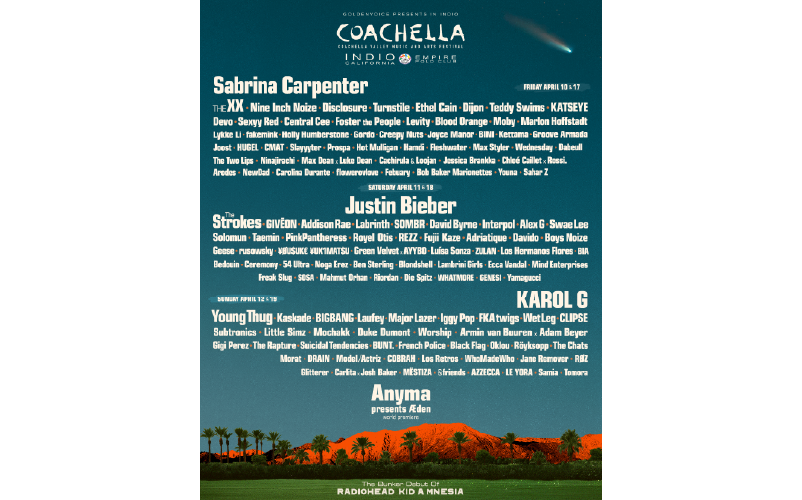
At Coachella 2026, K-pop was no longer a rising force—it was a defining one. Held across two weekends in April at the Empire Polo Club in Indio, California, the festival’s 25th edition featured global headliners including Sabrina Carpenter, Justin Bieber, and Karol G.
Yet beyond the headliners, a trio of Korean acts—BIGBANG, Taemin, and KATSEYE—collectively illustrated how deeply K-pop has embedded itself into the fabric of Western music festivals.
BIGBANG Coachella 2026: A Legacy Reclaimed
© YouTube @Kookie TV
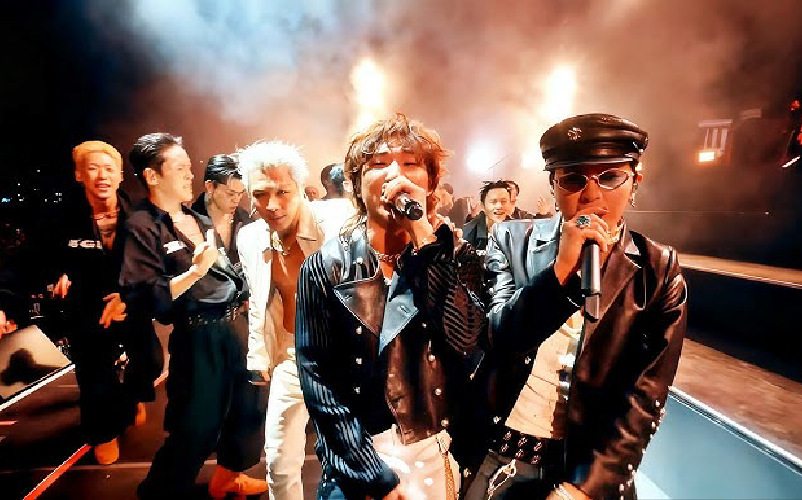
No moment carried more historical weight than BIGBANG Coachella 2026.
Performing as a trio—G-Dragon, Taeyang, and Daesung—the group delivered their first major global stage appearance in years, marking both a reunion and their 20th anniversary.
Opening with “Bang Bang Bang,” the set unfolded as a retrospective of their influence, featuring defining tracks such as “Fantastic Baby” and “Haru Haru.”
For American audiences, many of whom were introduced to K-pop through newer generations, BIGBANG’s performance functioned as a historical anchor. Debuting in 2006, the group helped shape the genre’s global blueprint—long before it became a mainstream export.
Their return was not framed as nostalgia alone, but as proof of continued relevance in a rapidly evolving industry.
A Moment That Bridged Genres: Daesung’s Trot Stage

© Dispatch
One of the most unexpected—and defining—moments of BIGBANG Coachella 2026 came during Daesung’s solo stage.
Breaking from the group’s signature hip-hop and electronic sound, Daesung introduced global audiences to Korean trot, a traditional genre rarely seen on Western festival stages. He performed tracks including “Look at Me, Gwisoon,” showcasing the genre’s distinctive vocal techniques and rhythmic phrasing.
The contrast was striking. Within a set dominated by high-energy pop production, the trot performance brought a different kind of intensity—playful, expressive, and deeply rooted in Korean musical tradition.
For many in the Coachella audience, it was likely their first exposure to trot. The response suggested curiosity rather than confusion, highlighting K-pop’s expanding role not just as entertainment, but as a cultural bridge.
In a festival defined by genre fusion, Daesung’s stage stood out as a reminder that K-pop’s global appeal is not limited to its most polished exports—it also carries elements of Korea’s musical heritage.
© YouTube @COACHELLA
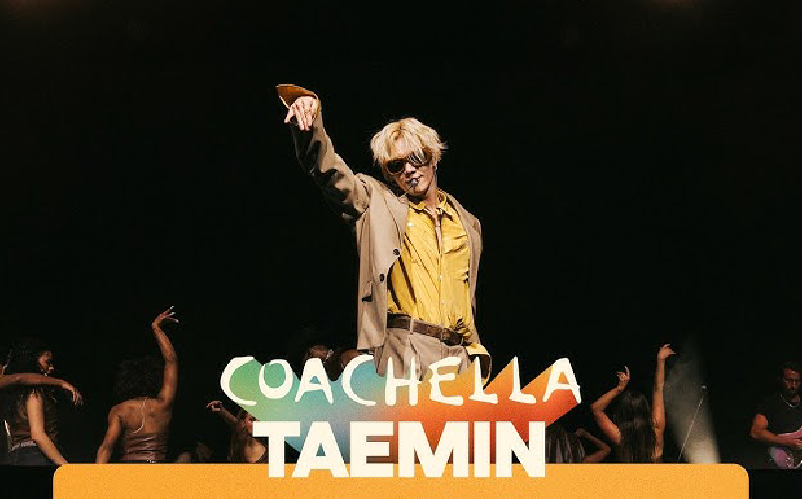
If BIGBANG represented legacy, Taemin Coachella 2026 embodied artistic precision.
A member of SHINee and a solo artist since 2014, Taemin was the only Korean male solo act in the 2026 lineup. His performances were scheduled across both festival weekends, signaling strong positioning within the lineup.
Known for his meticulous choreography and theatrical staging, Taemin approached Coachella not as a typical festival set, but as a fully realized performance piece. His stage presence—often described as fluid and controlled—has long set him apart within K-pop.
Fashion also played a critical role. His use of conceptual styling, including sculptural headpieces and layered textures, reinforced a broader trend: K-pop performances at Coachella are as visual as they are musical.
For U.S. audiences, Taemin’s set offered a rare introduction to a soloist format within K-pop—one that prioritizes individual artistry over group dynamics.
KATSEYE Coachella 2026: A New Model for Global K-pop
© YouTube @COACHELLA
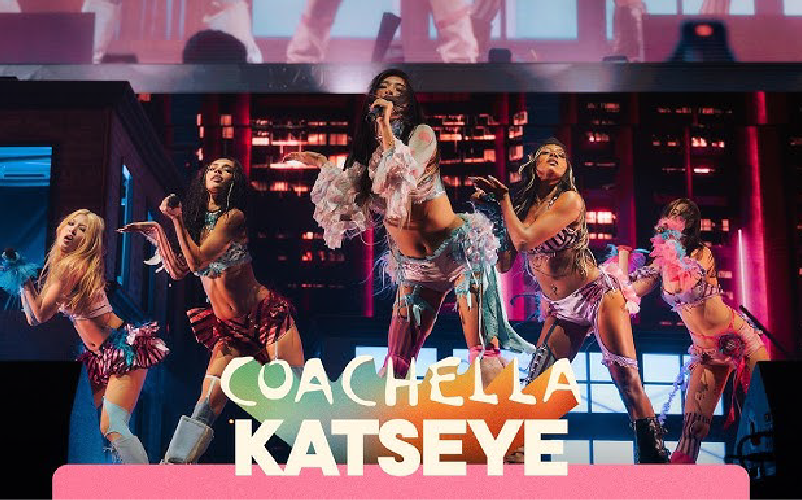
While BIGBANG looked to the past and Taemin refined the present, KATSEYE Coachella 2026 pointed toward the future.
The group, formed under HYBE’s global strategy, performed on the Sahara stage as part of their expanding presence in Western markets.
Their Coachella debut was marked by both performance and collaboration. In one of the festival’s most talked-about moments, KATSEYE was joined by artists behind the fictional group Huntr/x for a live performance of “Golden,” a track that had recently gained global attention.
The performance highlighted a key shift: K-pop is no longer confined to Korea-based production systems. Instead, it is evolving into a hybrid model—global members, cross-industry collaborations, and narratives that extend into film and digital media.
KATSEYE’s presence at Coachella signaled not just expansion, but transformation.
Beyond the Stage: Cultural and Industry Implications
© COACHELLA
For American audiences, the rise of K-pop at Coachella represents more than musical diversity—it signals a restructuring of global pop culture.
Streaming platforms, social media, and international fandoms have dissolved traditional geographic boundaries. As a result, festivals like Coachella now function as global convergence points rather than regional showcases.
The presence of BIGBANG, Taemin, and KATSEYE demonstrates three distinct phases of that evolution:
-
Foundation
-
Refinement
-
Expansion
Together, they form a continuum that defines K-pop’s trajectory in 2026.
The Future After Coachella

© YouTube @COACHELLA
What follows Coachella 2026 K-pop is likely to be even more significant.
BIGBANG’s performance aligns with ongoing anniversary activities, suggesting continued group activity.
Taemin’s successful solo stage strengthens the case for more individual K-pop acts in Western festivals.
KATSEYE’s debut underscores the industry’s shift toward globally constructed groups.
Coachella has always been about what comes next.
In 2026, K-pop did not just participate in that conversation—it helped define it.
 Free Shipping Over
 Ships From Korea


 전체 카테고리
 Trending Searches 🔥


 ARAB EMIRATES
 AUSTRALIA
 BELGIUM
 BRAZIL
 CANADA
 DENMARK
 FINLAND
 FRANCE
 GERMANY
 GREECE
 HONG KONG
 IRELAND
 ITALY
 JAPAN
 MACAO
 MALAYSIA
 MEXICO
 MONACO
 NETHERLANDS
 NEW ZEALAND
 NORWAY
 PHILIPPINES
 QATAR
 RUSSIAN
 SAUDI ARABIA
 SINGAPORE
 SWEDEN
 SWITZERLAND
 TAIWAN
 THAILAND
 UNITED KINGDOM
 VIET NAM


