© IMDb
When Yeon Sang-ho first redefined Korean zombie cinema with Train to Busan, the scale was explosive: moving trains, collapsing cities, nationwide panic.
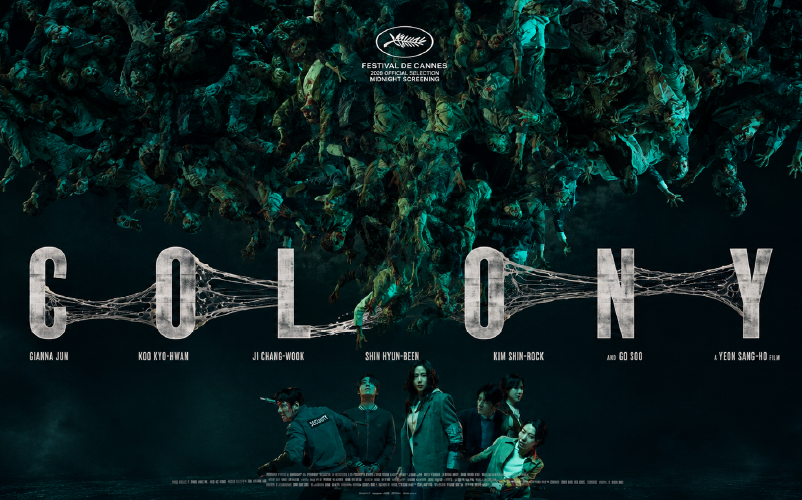
With Colony (군체), the director moves in the opposite direction. Instead of expanding outward, the film traps its horror inside a sealed building—turning confinement itself into the central tension.
The result is one of 2026’s most anticipated Korean films: a contained infection thriller led by an unusually high-profile cast including Jun Ji-hyun, Koo Kyo-hwan, Ji Chang-wook, Shin Hyun-been, Kim Shin-rok, and Go Soo.
A Zombie Film About Evolution, Not Outbreak
© IMDb
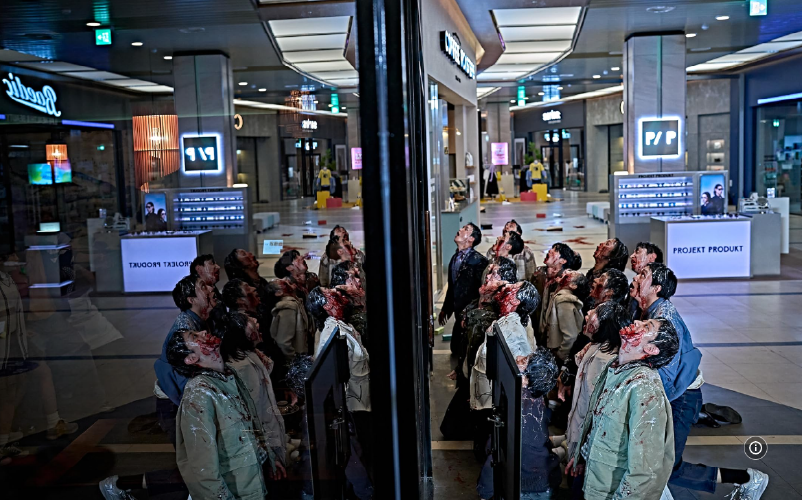
According to official plot descriptions, Colony follows survivors trapped inside a quarantined building during a mysterious infection crisis. But unlike conventional zombie films, the infected reportedly evolve into “unpredictable forms.”
That detail matters.
The horror of Colony does not come solely from infection itself, but from instability—an enemy that changes form faster than the survivors can understand it. This pushes the film away from traditional zombie rules and closer to body-horror territory.
For Yeon Sang-ho, this also marks a return to the genre that defined much of modern K-zombie cinema, while attempting to avoid repeating the exact formula of Train to Busan or Peninsula.
Jun Ji-hyun’s First Film in Over a Decade

© IMDb
One of the film’s biggest talking points is the return of Jun Ji-hyun to the big screen.
Her appearance in Colony marks her first theatrical film role in over a decade following Assassination.
In recent years, Jun Ji-hyun has remained associated with polished, high-profile screen personas. Colony, however, places her inside a far harsher environment—one built around physical survival, isolation, and escalating panic.
The casting itself reflects one of the film’s core appeals:
not simply star power, but contrast.
Why the Building Matters
© IMDb
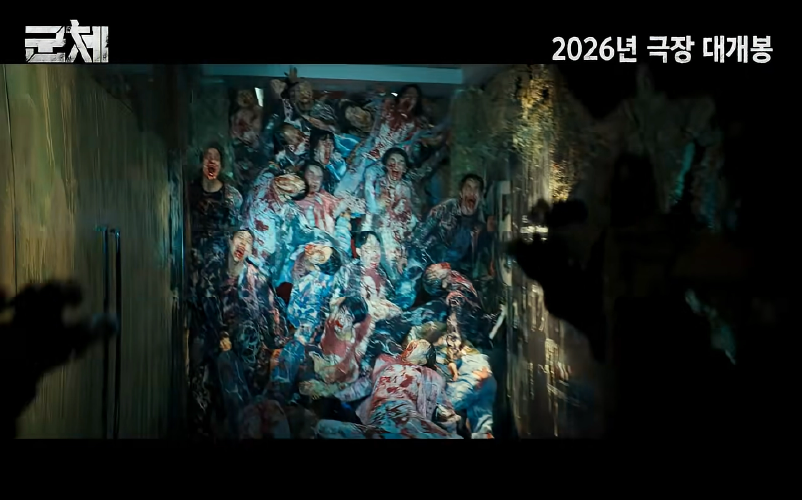
Unlike many large-scale disaster films, Colony limits most of its action to a single sealed structure.
This spatial restriction changes the rhythm of the film. There are fewer opportunities for escape, broader world-building, or relief. Instead, tension accumulates vertically and psychologically.
The building becomes more than a setting—it functions almost like a living system: sealed, unstable, and increasingly hostile.
This contained approach also aligns with a growing trend in Korean thrillers, where horror is becoming more claustrophobic and socially compressed rather than globally expansive.
Cannes Buzz and the Return of K-Zombie Cinema

© hidomin
Before its Korean release, Colony was invited to the Midnight Screening section of the 2026 Cannes Film Festival.
Following its screening, the film quickly rose in Korean reservation rankings ahead of release, generating significant buzz online.
The reaction suggests something larger than simple nostalgia for zombie films. After years of increasingly formulaic infection thrillers worldwide, Colony arrives at a moment when audiences appear more interested in:
-
psychological tension
-
contained horror
-
evolving creature design
-
character-driven survival narratives
rather than pure large-scale destruction.
More Than a Zombie Movie
© IMDb
What makes Colony particularly interesting is that it arrives during a transition period for Korean genre cinema itself.
The global success of Korean thrillers and horror films has already established Korean filmmakers as major players in international genre filmmaking. But maintaining that momentum requires reinvention.
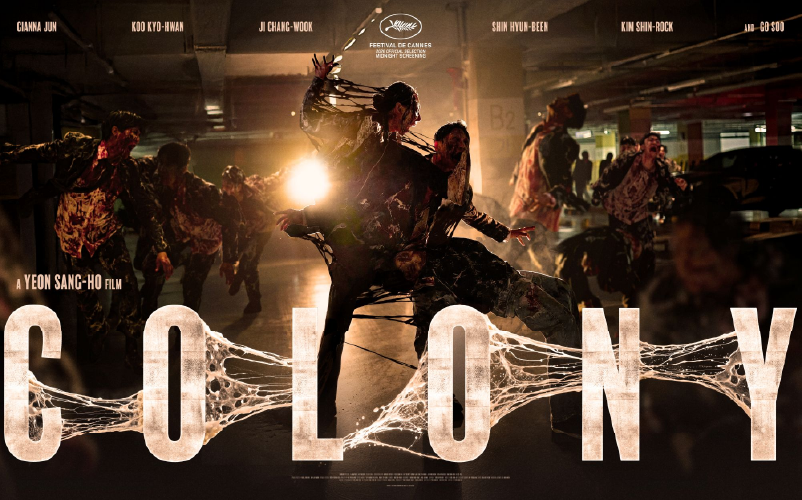
With Colony, Yeon Sang-ho appears less interested in recreating past success and more focused on mutation—both literally and structurally.
Final Take
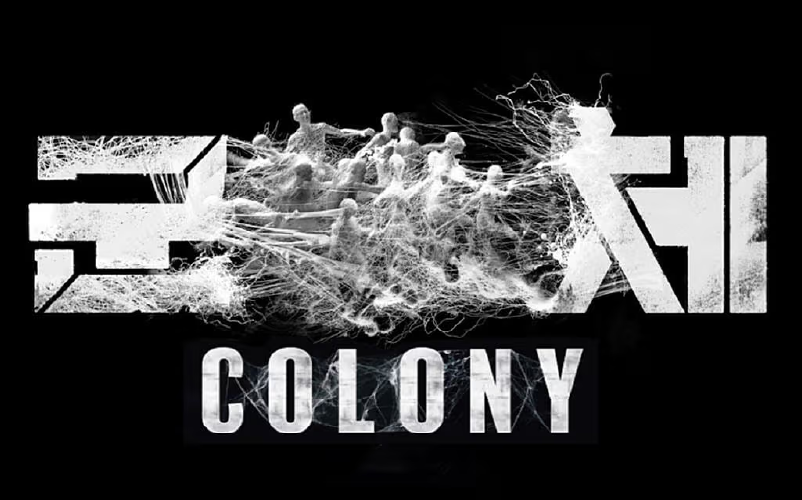
© IMDb
“Colony is not trying to outrun Train to Busan. It’s trying to evolve past it.”
And in 2026, that may be exactly what Korean zombie cinema needs most.
 Free Shipping Over
 Ships From Korea


 전체 카테고리
 Trending Searches 🔥







 ARAB EMIRATES
 AUSTRALIA
 BELGIUM
 BRAZIL
 CANADA
 DENMARK
 FINLAND
 FRANCE
 GERMANY
 GREECE
 HONG KONG
 IRELAND
 ITALY
 JAPAN
 MACAO
 MALAYSIA
 MEXICO
 MONACO
 NETHERLANDS
 NEW ZEALAND
 NORWAY
 PHILIPPINES
 QATAR
 RUSSIAN
 SAUDI ARABIA
 SINGAPORE
 SWEDEN
 SWITZERLAND
 TAIWAN
 THAILAND
 UNITED KINGDOM
 VIET NAM


