
© NETFLIX
Netflix’s Teach You a Lesson is not the kind of K-drama that quietly enters the streaming chart. Since its release, the Korean school action drama has become one of the most talked-about Netflix series of the season — not only because it is intense and easy to binge, but because it touches one of Korea’s most sensitive social issues: what happens when schools stop feeling safe for students and teachers.
Based on the Korean webtoon Get Schooled, Teach You a Lesson is set in a world where school violence, bullying, toxic parents, and collapsing teacher authority have reached a breaking point. To restore order, the government creates a fictional organization called the Educational Rights Protection Bureau, a special task force that intervenes when schools become too chaotic for ordinary systems to handle.
At the center of the drama is Na Hwa-jin, played by Kim Moo-yul, a former special forces figure turned investigator. Alongside other bureau members, he visits troubled schools and confronts cases that ordinary teachers, administrators, and parents can no longer control. The result is part school drama, part action thriller, and part social revenge fantasy.
But the reason everyone is talking about Teach You a Lesson is not simply because it is entertaining. It is because the drama is built around a difficult question: when a system fails to protect people, why do audiences become so drawn to stories of extreme justice?
A Korean School Drama With Global Appeal
© NETFLIX
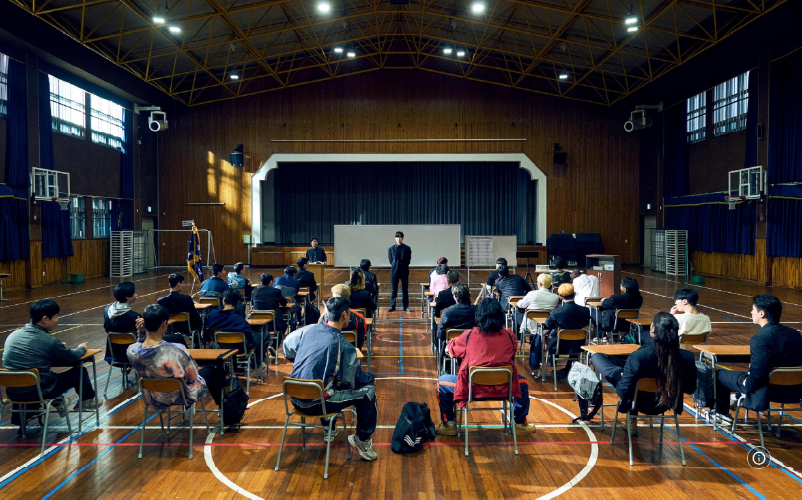
On the surface, Teach You a Lesson looks very Korean. It deals with school hierarchy, academic pressure, classroom violence, parent complaints, and the weakening authority of teachers — issues that are often discussed in Korean society.
However, the emotions behind the story are easy for international viewers to understand. Bullying, institutional failure, and the frustration of watching victims go unheard are not uniquely Korean problems. That is why the drama travels so well across borders.
For global Netflix viewers, the appeal is immediate. The show does not require deep cultural knowledge to understand the conflict. Every episode introduces a broken school environment, a victim who needs protection, and a system that has failed to act quickly enough. Then the Educational Rights Protection Bureau arrives like a vigilante-style rescue team.
That structure makes the drama highly watchable. It gives viewers a clear emotional rhythm: anger, tension, confrontation, and release. In an age where audiences often want fast-moving stories with strong moral stakes, Teach You a Lesson delivers exactly that.
Why the Drama Feels So Addictive
© NETFLIX
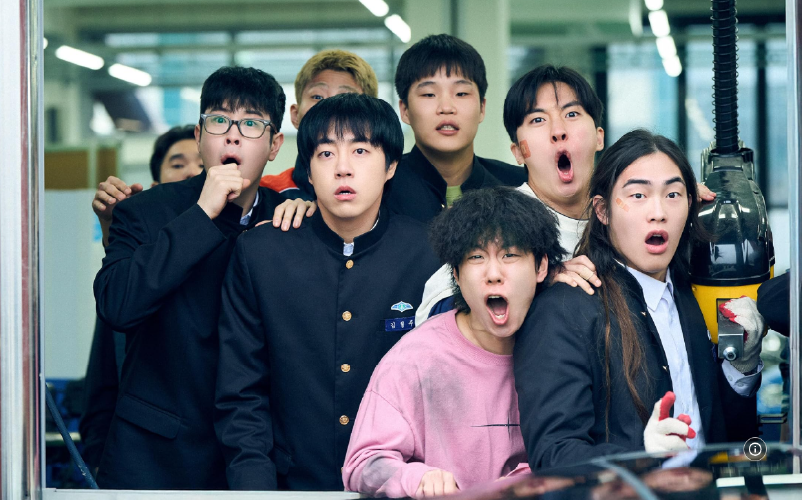
One major reason the series has caught attention is its genre mix. It is not only a school drama. It is also an action series, a revenge fantasy, and a social-issue thriller.
K-dramas have already proven that school violence can become a powerful global subject. Series like The Glory showed how stories about bullying and delayed justice can resonate far beyond Korea. Teach You a Lesson takes a different approach. Instead of focusing mainly on long-term revenge, it turns each school crisis into a direct confrontation.
That format makes the drama easier to binge. Viewers do not have to wait many episodes for the conflict to explode. The show moves quickly, often using action and dramatic intervention to create immediate payoff.
This is also where the controversy begins.
Why Teach You a Lesson Is Controversial

© NETFLIX
The same thing that makes Teach You a Lesson satisfying for some viewers also makes it uncomfortable for others. The drama is built on the fantasy of forceful correction. Its heroes step into classrooms and solve problems with methods that are far more aggressive than anything allowed in real education.
That is why the series has drawn criticism. Before the Netflix adaptation, the original webtoon Get Schooled had already faced backlash for its depiction of discipline, authority, and violence. Critics argued that the story risked making physical punishment look like a solution to educational problems.
This matters because the drama is not set in a distant fantasy world. It uses real anxieties: school bullying, teacher burnout, parent pressure, and public frustration with slow institutions. When a show dramatizes those problems through violent or extreme intervention, the line between social critique and harmful fantasy becomes complicated.
For a global audience, this controversy may actually make the series more compelling. Viewers are not only asking, “What happens next?” They are also asking, “Should I be enjoying this?”
That tension is one of the reasons the drama keeps generating conversation.
More Than Just a School Action Drama

© NETFLIX
What makes Teach You a Lesson interesting is that it is both highly commercial and deeply uncomfortable. It is designed to be thrilling, but it is built from real social fears. It gives viewers justice, but it also asks whether justice delivered through force is still justice.
That contradiction is the reason the drama stands out.
If the show were only a simple revenge fantasy, it might have disappeared quickly after release. If it were only a serious social drama, it might not have reached such a broad audience. Instead, Teach You a Lesson sits somewhere in the middle: entertaining enough to binge, controversial enough to debate, and familiar enough for global audiences to understand.
Final Takeaway

© NETFLIX
Everyone is talking about Netflix’s Teach You a Lesson because it turns a painful social issue into a fast-moving K-drama spectacle. It is about school violence, but also about failed systems. It is about teacher authority, but also about the danger of turning punishment into entertainment.
That is why the drama is attracting overseas viewers. It gives them action, tension, and emotional release — but it also leaves behind a question that is harder to ignore:
When a story makes extreme justice feel satisfying, what does that say about the systems people no longer trust?
 Free Shipping Over
 Ships From Korea


 전체 카테고리
 Trending Searches 🔥


 ARAB EMIRATES
 AUSTRALIA
 BELGIUM
 BRAZIL
 CANADA
 DENMARK
 FINLAND
 FRANCE
 GERMANY
 GREECE
 HONG KONG
 IRELAND
 ITALY
 JAPAN
 MACAO
 MALAYSIA
 MEXICO
 MONACO
 NETHERLANDS
 NEW ZEALAND
 NORWAY
 PHILIPPINES
 QATAR
 RUSSIAN
 SAUDI ARABIA
 SINGAPORE
 SWEDEN
 SWITZERLAND
 TAIWAN
 THAILAND
 UNITED KINGDOM
 VIET NAM


