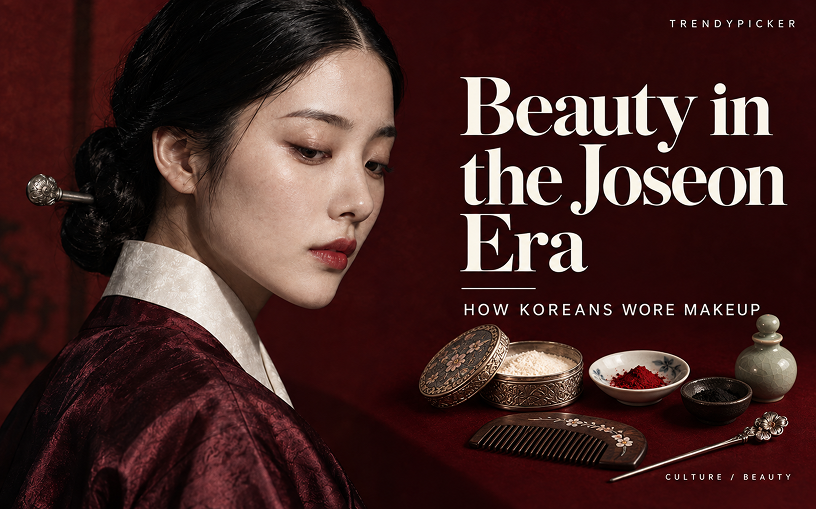
What did a beauty routine look like before cushion foundation, eyebrow pencils, and lip tint? Joseon-era makeup involved facial preparations, white powder, dark brow pigments, and rouge. Surviving objects and written accounts reveal both the materials people used and the care they put into their appearance.
For anyone whose first introduction to historical Korean beauty came through a period drama, the details are especially fascinating. Makeup required mixing, storage, and tools that look quite different from a modern cosmetics bag.
The following sections organize those practices into familiar stages. They describe documented approaches rather than a fixed routine followed by everyone: time period, social position, and occasion all mattered.
1. What Shaped Joseon-Era Makeup?
© the Academy of Korean Studies
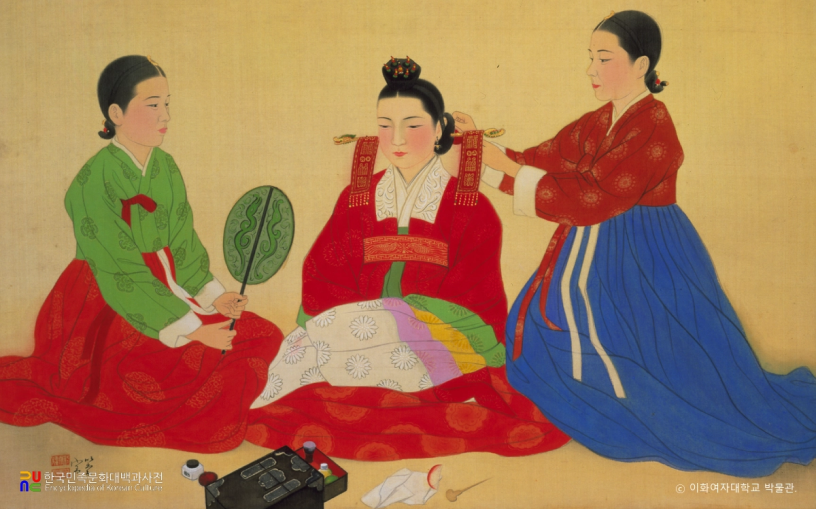
Joseon beauty ideals emphasized a composed appearance and the relationship between outward presentation and inner character. Confucian values encouraged restraint, although elaborate grooming and ceremonial dress continued to have a place.
The Encyclopedia of Korean Culture distinguishes understated everyday makeup from the more ornate preparations associated with weddings and court celebrations. It also explains yayong (冶容), a term suggesting artificial or exaggerated beautification. This was broader than simply applying face powder too heavily.
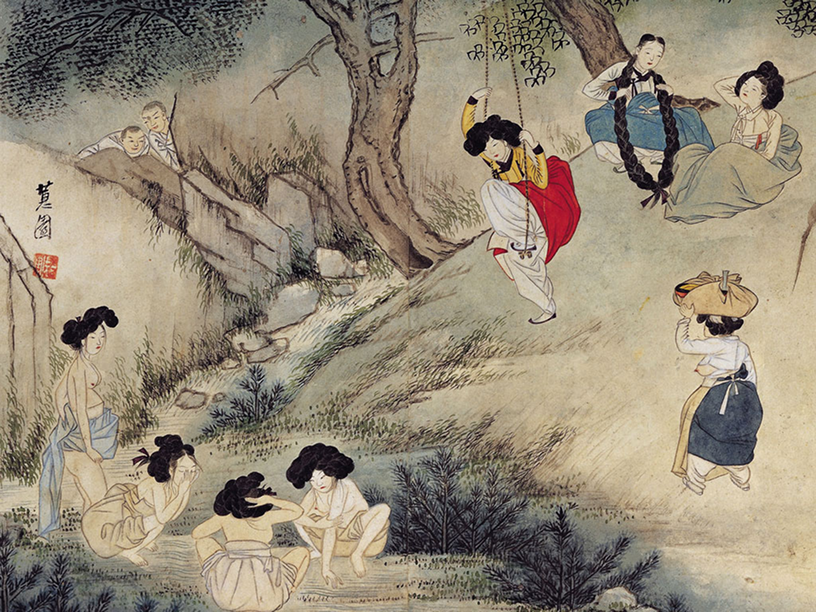
A preference for pale skin also shaped cosmetic choices. The National Institute of Korean History connects this ideal with social status and freedom from outdoor manual labor. It reflects the values and inequalities of the period, rather than a universal definition of beauty.
2. Preparing the Skin: Miansu, Myeonyak and Cosmetic Oils
© 2025 Korea Heritage Service
Before color cosmetics came cleansing and facial preparations.
Historical cleansing materials included jodu, a powder made from ingredients such as ground beans. Mixed with water, it served as a washing preparation. After cleansing, people could use facial liquids, richer preparations, and oils.
Miansu: A Facial Liquid
Miansu (美顔水) referred to preparations used to care for the complexion. A curator’s account published by the Korea Heritage Agency describes versions made from plant liquids, including gourd stems, loofah, cucumber, and watermelon.
Myeonyak: A Richer Facial Preparation
Myeonyak (面藥) is often compared with face cream because it was used to protect and soften the skin.
Hwajangyu: Oils With Several Uses
Hwajangyu (化粧油), or cosmetic oils, could be used in facial and hair preparations and to mix cosmetic materials into a spreadable consistency.
These comparisons help modern readers understand their roles, but the categories do not match today’s toner, moisturizer, and serum exactly. The Academy of Korean Studies notes that the precise manufacture and use of Joseon miansu remain incompletely documented. It also describes overlap between facial liquids and cream-like preparations.
3. Baekbun: How Was Face Powder Applied?
© gogungmuseum
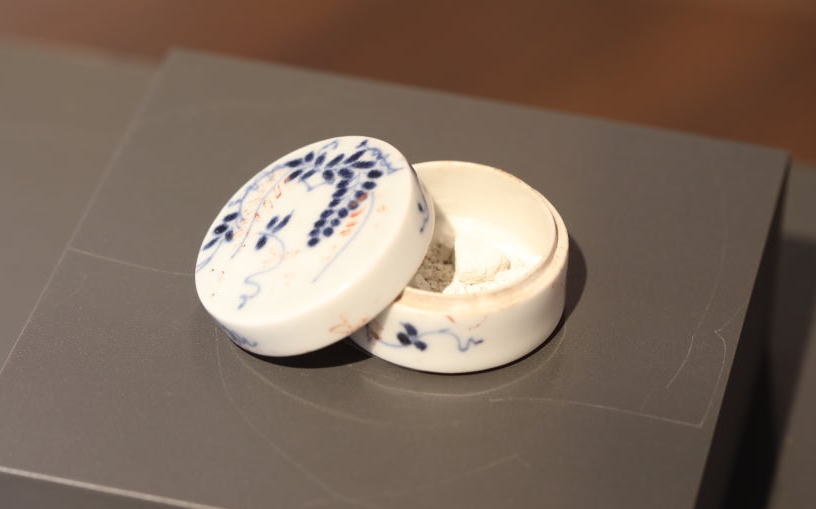
Baekbun (白粉) means white powder. Historical descriptions include grain-based powders made with rice, barley, or other grains, as well as powder made from four-o’clock flower seeds.
A study of Joseon gisaeng makeup also lists burned shell powder among materials used in traditional white powder. This expands the range of documented ingredients, but does not establish one recipe shared by all households.
Grain powder did not adhere especially well on its own. National Palace Museum scholarship explains that it was mixed with water or oil before application. Small dishes and spoons helped users portion and prepare the mixture.
This makes the historical process easier to picture: powder was taken from its container, mixed in a dish, and then applied to the face. The preparation was part of the makeup routine itself.
Yeonbun (鉛粉) contained lead and was valued for its adherence. Its history also shows why older cosmetics should not be romanticized as automatically gentle or safe.
4. Mimuk: Shaping and Drawing the Eyebrows
© 2025 Korea Heritage Service
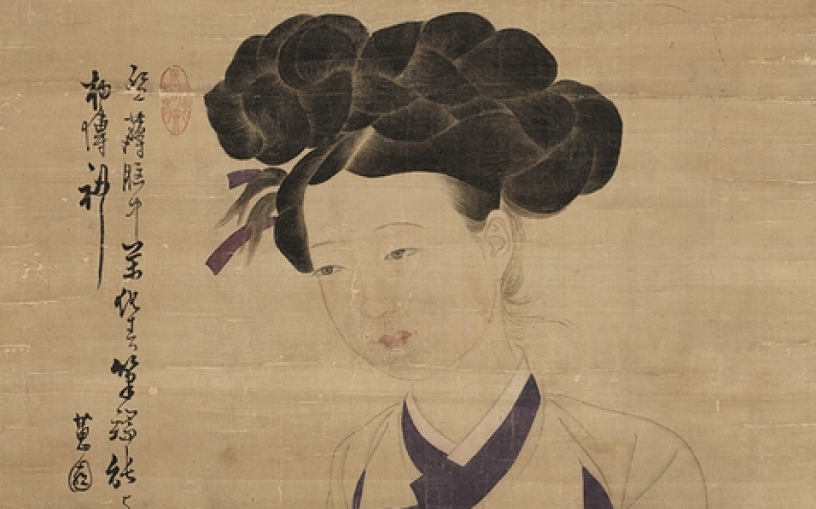
Eyebrows received careful attention.
A curator’s discussion of traditional makeup identifies crescent-moon and willow-leaf shapes as favored forms in written and visual evidence. These suggest slim, curved brows, although other shapes also existed.
The Gyuhap chongseo, a household encyclopedia by Bingheogak Yi, includes the Simiyo, a description of ten eyebrow forms. Dark pigment known as mimuk (眉墨) could be prepared from soot or burned plant materials. Some users mixed it with oil and applied it with a brush.
The interesting detail is the attention to shape. Even within an ideal of restrained appearance, grooming allowed room for decisions about line, curve, and definition.
5. Yeonji: Adding Color to Cheeks and Lips
© 2026 Korea Heritage Service
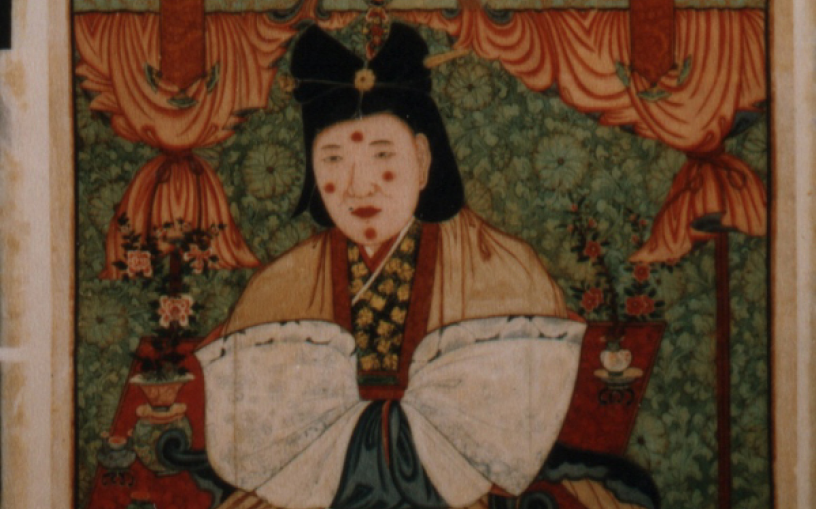
Yeonji (臙脂) was rouge used to color the cheeks and lips.
One version used pigment extracted from safflower, also called honghwa. The pigment could be prepared in small solid portions and mixed with oil when needed.
Another material was jusa (朱砂), or cinnabar. The Encyclopedia of Korean Culture records a Joseon court method for making cinnabar rouge and notes concerns associated with prolonged use. These are historical materials to understand, rather than formulas to recreate.
Rouge also needs to be understood through occasion. It would be misleading to imagine every woman wearing the same rosy cheeks each day. Everyday presentation and ceremonial makeup had different expectations.
Traditional bridal yeonji-gonji, the red marks on the cheeks and forehead, offers a particularly recognizable example of makeup used for a special event.
© National Folk Museum of Korea
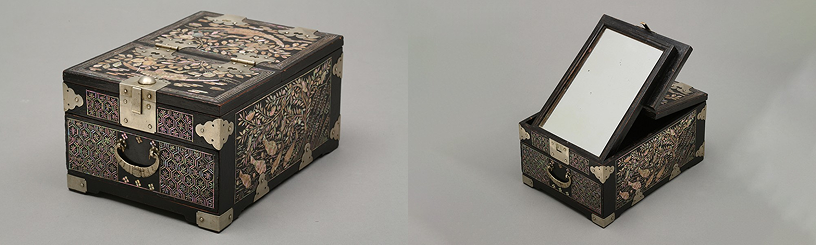
The objects used for Joseon-era makeup help bring these practices into focus.
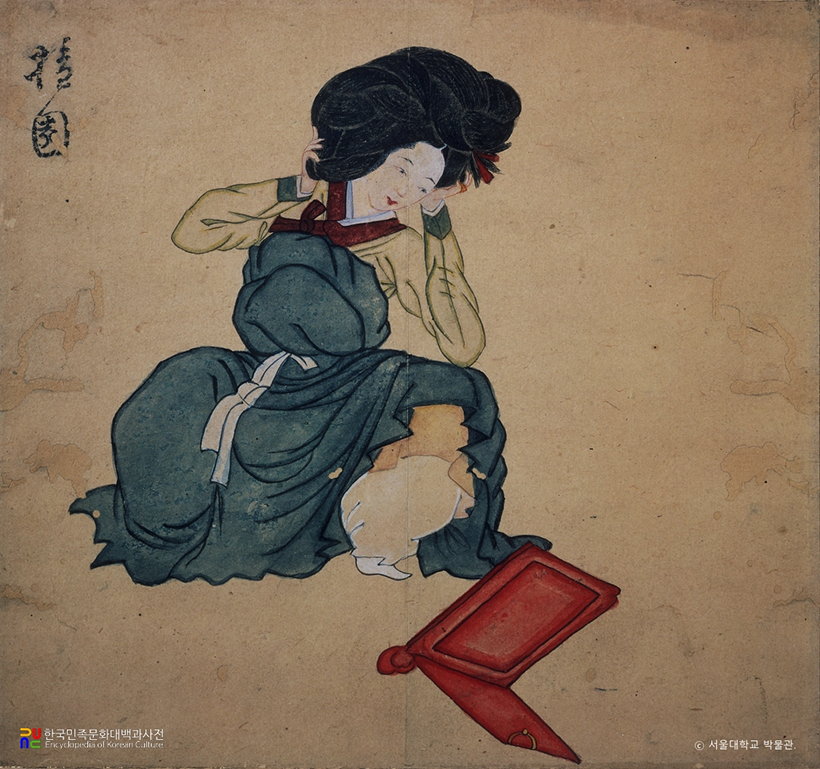
A gyeongdae was a compact wooden furnishing with a mirror and storage for grooming items. Folding mirrors and small drawers made room for cosmetics, combs, and hair ornaments. Its proportions suited rooms where people sat on the floor.
Men also used these furnishings to arrange their hair, reminding us that attention to appearance extended beyond women’s color cosmetics.
Royal objects offer another kind of evidence. The National Museum of Korea preserves silver cosmetic containers from Princess Suksin’s tomb, including one that still contained white powder. Such objects document a specific person’s world while giving us a tangible connection to historical beauty practices.
TrendyPicker’s Pick
© the Academy of Korean Studies
The most engaging part of Joseon-era makeup is the preparation behind the finished face: mixing powder in a small dish, choosing a brow shape, and keeping rouge in a container ready for use.
When watching a historical drama or exploring a museum collection, look beyond the overall appearance. Notice the vessel beside the mirror, the curve of the eyebrows, or the difference between everyday and bridal dress.
Those details turn beauty history into a story about daily life—one careful gesture at a time.
 Free Shipping Over
 Ships From Korea


 전체 카테고리
 Trending Searches 🔥


 ARAB EMIRATES
 AUSTRALIA
 BELGIUM
 BRAZIL
 CANADA
 DENMARK
 FINLAND
 FRANCE
 GERMANY
 GREECE
 HONG KONG
 IRELAND
 ITALY
 JAPAN
 MACAO
 MALAYSIA
 MEXICO
 MONACO
 NETHERLANDS
 NEW ZEALAND
 NORWAY
 PHILIPPINES
 QATAR
 RUSSIAN
 SAUDI ARABIA
 SINGAPORE
 SWEDEN
 SWITZERLAND
 TAIWAN
 THAILAND
 UNITED KINGDOM
 VIET NAM


