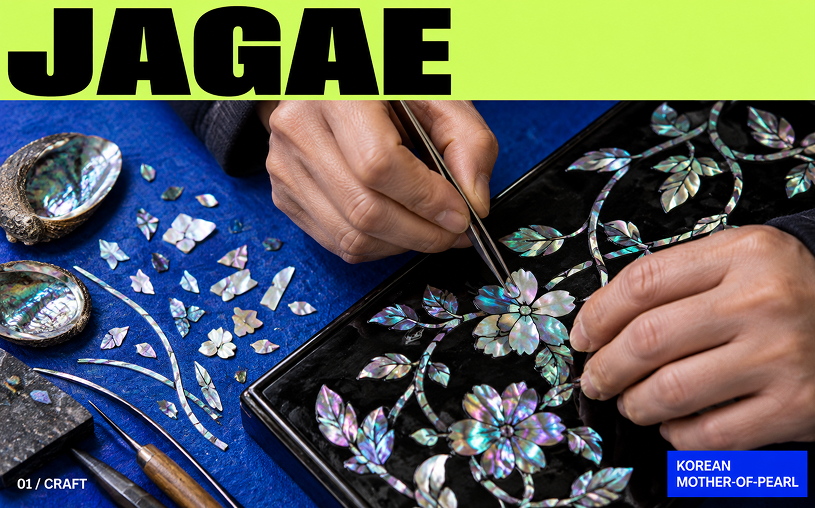
Tilt a small decorated box toward the light, and its flowers may shift from pearly white to pink, green, or blue. That changing glow is part of the appeal of Korean mother-of-pearl crafts: a still object can look different each time you move around it.
You might encounter the material on a traditional jewelry box, a museum cabinet, or a small souvenir that fits inside your bag. Behind the shimmer lies a craft built around carefully prepared shell, intricate patterns, and patient surface work.
Here is a beginner’s guide to understanding the materials, noticing the craftsmanship, and choosing a piece that feels personal.
1. What Is Mother-of-Pearl?
© Newscenter
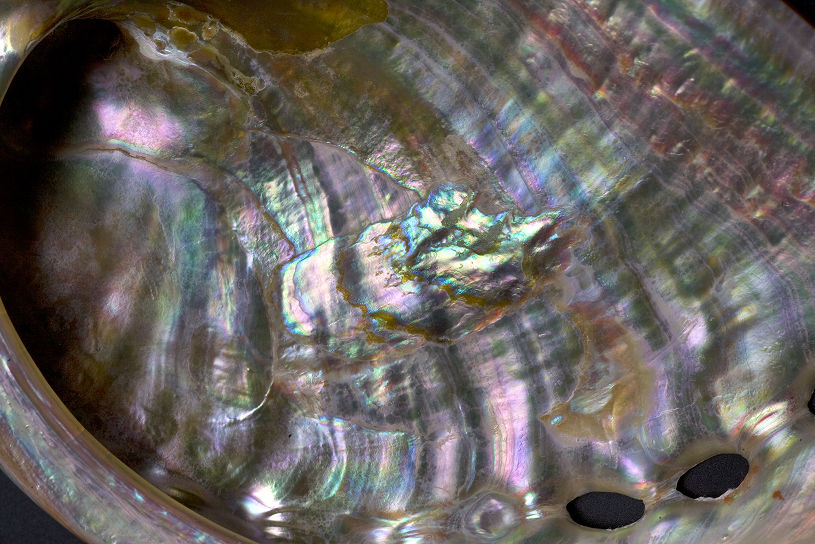
Mother-of-pearl, also called nacre, is the lustrous material found inside certain mollusk shells. Abalone shells are particularly known for their vivid iridescence.
The shifting colors come from the way light interacts with the material’s microscopic layers. As the viewing angle changes, different colors become visible. This optical effect helps explain why a photograph can capture only one impression of a mother-of-pearl surface.
In Korean craft, you will often encounter the word jagae (자개) for the prepared shell used in decoration.
When you see a piece in person, look at it from several angles. A section that seems almost silver from the front may reveal a different color when viewed from the side.
2. Jagae, Najeon, and Najeonchilgi: What Is the Difference?
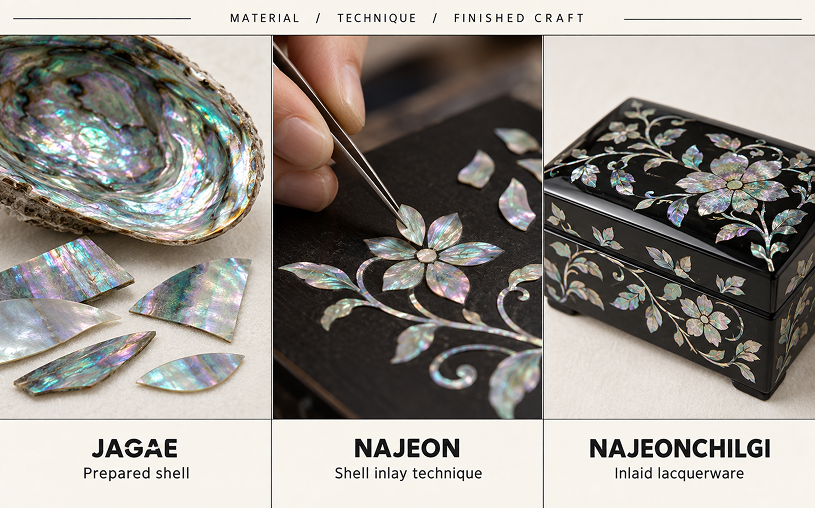
These related terms become easier to understand when you separate the material from the technique.
Jagae: The shell material prepared for decorative use.
Najeon: The technique of decorating a surface with shaped pieces of mother-of-pearl.
Najeonchilgi: Lacquerware decorated with mother-of-pearl inlay.
The National Museum of Korea describes najeon as a process of thinning shells, cutting them into decorative shapes, and attaching them to an object’s surface.
Traditional lacquer, known in Korean as ottchil, is derived from tree sap and hardens into a protective coating. Mother-of-pearl and lacquer are distinct materials whose combination gives this craft its characteristic appearance.
This distinction is useful when shopping. A product described as “mother-of-pearl style” may emphasize the appearance, so read the materials and production details before assuming it is traditional lacquerware.
3. How Are Korean Mother-of-Pearl Crafts Made?
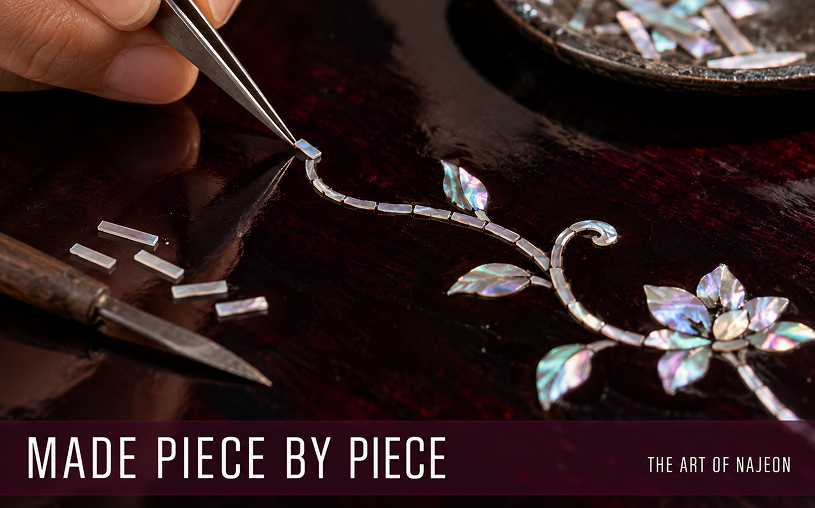
The finished surface can look effortless, but the pattern is assembled from many individual pieces.
In a simplified overview, the work involves preparing a base, preparing and shaping the shell, arranging the decoration, and completing the lacquer finish. The precise sequence depends on the object and technique. Korea Tourism Organization describes a process involving repeated lacquer work around the application of mother-of-pearl.
Some details are created from extremely narrow strips. The National Museum of Korea explains how kkeuneumjil, a cutting-and-joining technique, was used to form the stems on a decorated box. Small shell sections follow the line of the design.
Next time you look at a curling vine or a slender flower stem, follow its outline closely. What first appears to be one continuous line may reveal the maker’s careful arrangement of separate fragments.
4. A Tradition With Changing Patterns
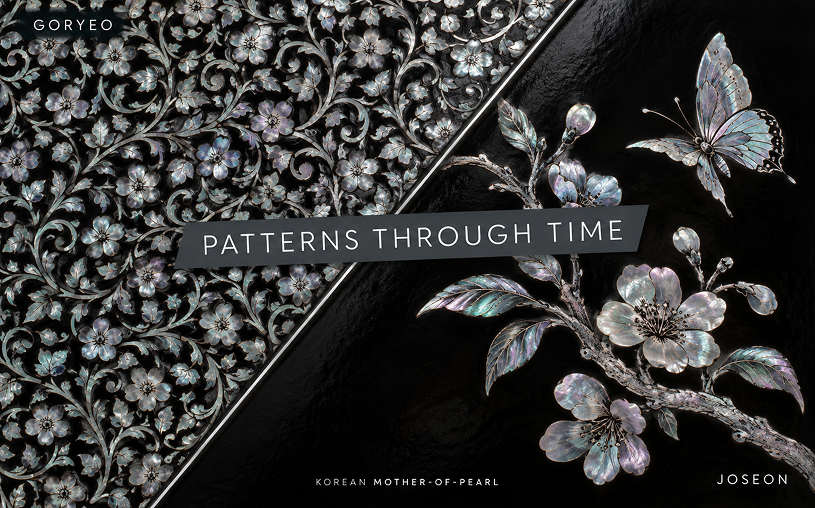
Korean mother-of-pearl lacquerware has a history extending back through the Goryeo period. Surviving works show that its designs changed over time.
The National Museum of Korea contrasts the tightly arranged small flowers and scroll patterns found on Goryeo examples with larger, bolder, and more pictorial designs on Joseon objects.
The Met’s online exhibition archive offers a useful introduction for readers in the United States. Its Shell and Resin exhibition brought together objects ranging from a twelfth-century box to contemporary works by master artists.
The archive includes stationery boxes, clothing boxes, and a 2016 work by Sohn Daehyun decorated with grapes and butterflies. Although the exhibition has ended, its online collection provides a way to compare historical and contemporary approaches.
As you browse, notice how much space the maker leaves around the pattern. A densely decorated surface and a single branch against a quiet background create very different impressions.
5. From Traditional Boxes to Everyday Accessories
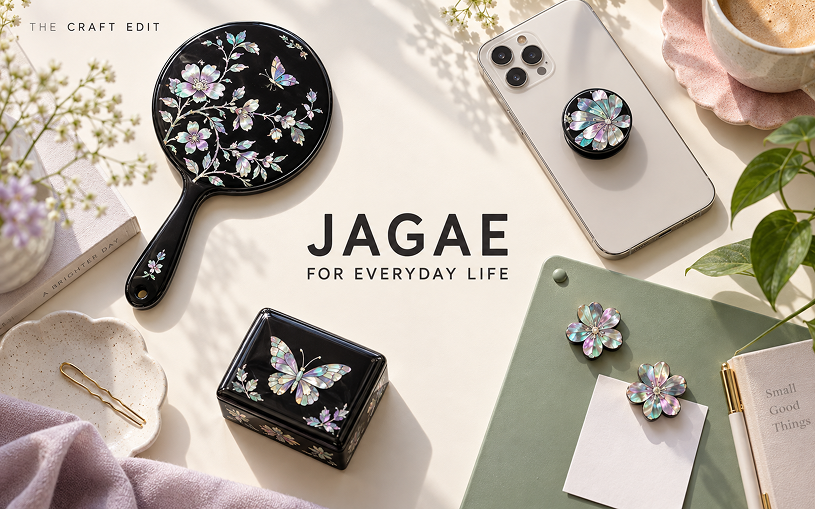
You do not need room for a large cabinet to enjoy Korean mother-of-pearl crafts.
Korea Tourism Organization highlights smaller objects from Tongyeong, including decorated hand mirrors, phone grips, and magnets. It also identifies the coastal city as an important center of the craft and its makers.
A small object can make a good first purchase because you can choose something that already belongs in your routine.
A hand mirror offers a connection to personal grooming. A magnet creates a small decorative moment at home. A jewelry box may suit someone who enjoys arranging keepsakes.
Think about where the object will live and how often you will see it. The strongest souvenir choice is often the one you continue using after the trip.
6. What to Check Before Buying
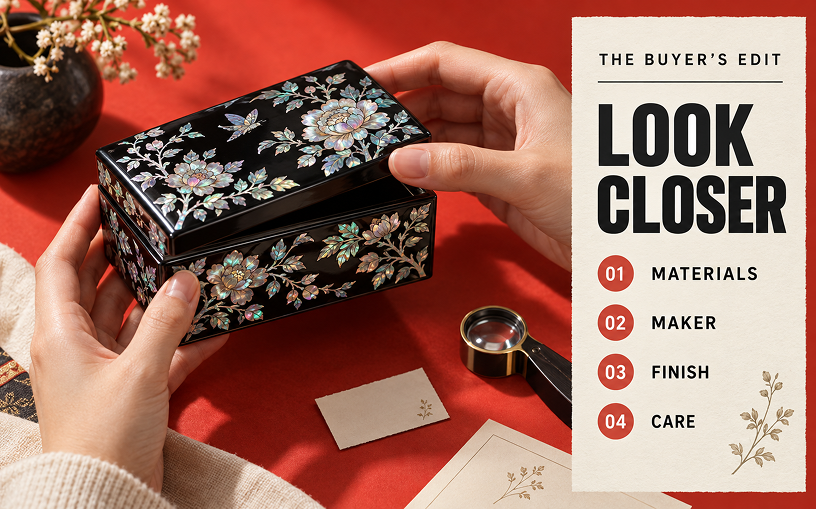
Start with the design you like, then ask about how the piece was made.
Check the materials. Is the decoration real shell, a printed pattern, or another iridescent material? What is the base made from, and what finish has been applied?
Ask about the maker. If Korean craftsmanship is central to your purchase, look for information about the workshop, artist, or place of production.
Look beyond the overall shine. Examine the pattern’s edges, the fit of the lid, and the finish around corners. These details can help you understand the object more clearly than a distant product photograph.
Request care instructions. Cleaning and storage should suit the exact materials and finish. Follow the maker’s guidance, especially for an older or handmade piece.
For an online purchase, a short video showing the object turning in the light can be especially useful. It reveals more of the shell’s changing appearance than a single front-facing image.
TrendyPicker’s Pick
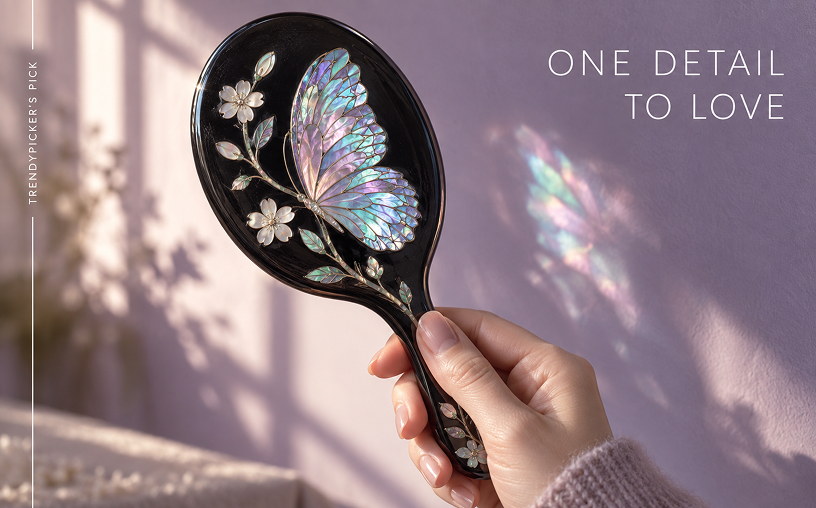
Start with one object and one detail you love: a curved flower stem, a butterfly wing, or a small patch of shell that changes color as you move it.
Our pick for a first purchase is a compact piece you will see regularly, such as a hand mirror or small keepsake box. Let the pattern and purpose guide you.
The pleasure of Korean mother-of-pearl crafts is in looking again. A familiar object, seen in different light, can still offer something new.
 Free Shipping Over
 Ships From Korea


 전체 카테고리
 Trending Searches 🔥


 ARAB EMIRATES
 AUSTRALIA
 BELGIUM
 BRAZIL
 CANADA
 DENMARK
 FINLAND
 FRANCE
 GERMANY
 GREECE
 HONG KONG
 IRELAND
 ITALY
 JAPAN
 MACAO
 MALAYSIA
 MEXICO
 MONACO
 NETHERLANDS
 NEW ZEALAND
 NORWAY
 PHILIPPINES
 QATAR
 RUSSIAN
 SAUDI ARABIA
 SINGAPORE
 SWEDEN
 SWITZERLAND
 TAIWAN
 THAILAND
 UNITED KINGDOM
 VIET NAM


