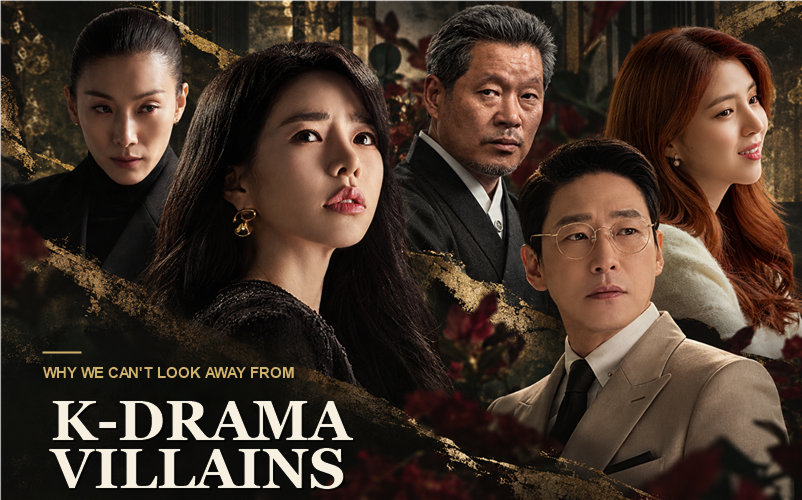
A smile that feels like an insult. A perfectly calm voice that makes everyone else nervous. A character who treats rejection as a personal injustice. Memorable K-drama villains can change the atmosphere of a scene before they finish their first sentence.
Their appeal comes from the details: how an actor holds a stare, how clothing signals authority, and how a character’s desires shape every conversation.
These five antagonists offer different kinds of tension, from polished social cruelty to the uncomfortable emotions surrounding an affair. Here is a spoiler-light guide to the performances, styles, and motivations that make them difficult to forget.
1. Park Yeon-jin in The Glory: Entitlement with a Camera-Ready Smile
© Netflix
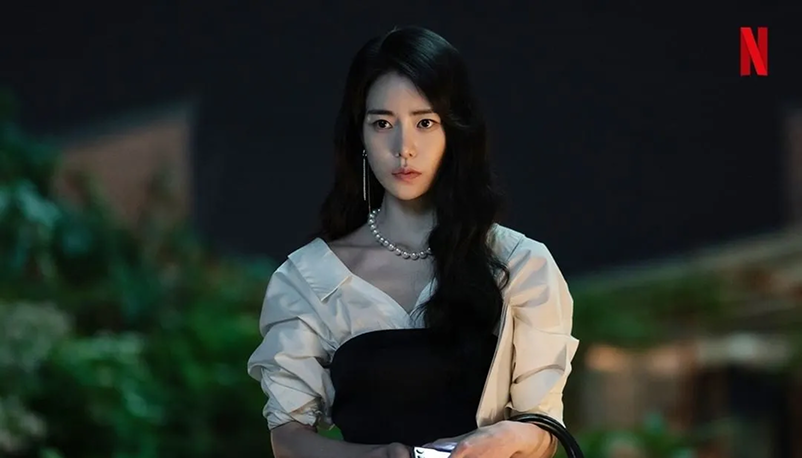
Played by Lim Ji-yeon
Park Yeon-jin has built an enviable adult life: a weathercasting career, a wealthy husband, and a family. She also led the group that tormented Moon Dong-eun during their school years. Her family’s influence helped shield her from consequences.
What makes her unsettling is how naturally she accepts that protection. She expects her comfortable life to continue.
In an interview with W Korea, Lim Ji-yeon explained that she approached Yeon-jin as someone who had never properly understood wrongdoing or guilt. She also discussed developing the character’s dismissive expressions and the brief moments when her confidence
That gives viewers something precise to watch: the distance between a polished public face and a private expression of contempt. Her carefully maintained appearance supports the image she wants others to accept.
What drives her: Preserving the comfortable life and social position she considers hers by right.
Watch for: The way a smile becomes a sneer—and how quickly she reacts when someone refuses to be intimidated.
Your pick if: You enjoy revenge dramas where a small change in expression can feel like a major shift in power.
2. Kim Joo-young in SKY Castle: The Power of Staying Calm
© jtbc
Played by Kim Seo-hyung
Kim Joo-young is an elite college admissions coordinator hired by wealthy parents determined to secure prestigious futures for their children. Her influence begins with something they desperately want: confidence that their children will succeed.
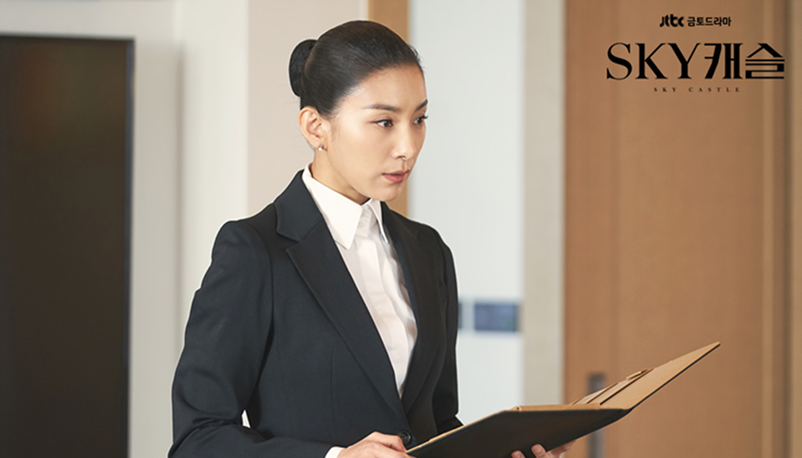
Kim Seo-hyung gives that promise an unsettling authority. An interview in The Korea Times highlighted the character’s commanding presence, combed-back hair, and all-black clothing.
The styling makes her immediately recognizable. Her severe silhouette and restrained expression suggest someone who will reveal only what she chooses.
Our reading of her appeal is simple: she makes viewers pay attention by giving them very little. A pause invites scrutiny. A measured response can make the person opposite her appear increasingly anxious.
In a story built around educational ambition, that composure becomes a powerful advantage.
What drives her on screen: Maintaining influence over the families who place their ambitions in her hands. Her deeper motivations are best discovered while watching.
Watch for: Her pauses, controlled delivery, and the moment a conversation begins to feel like an instruction.
Your pick if: You prefer psychological manipulation and quiet menace.
3. Jang Dae-hee in Itaewon Class: Authority That Expects Obedience
© jtbc
Played by Yoo Jae-myung
As chairman of the food conglomerate Jangga, Jang Dae-hee stands opposite Park Saeroyi’s determination to build a business on his own terms. Their conflict gives Itaewon Class a personal face for questions about power, principle, and success.
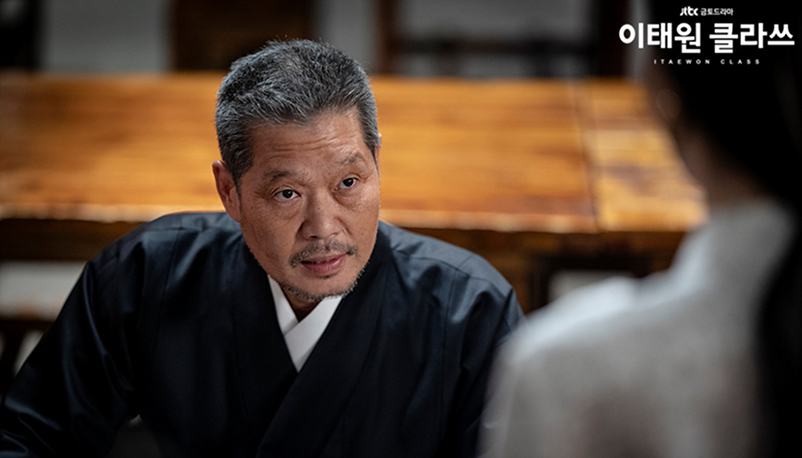
Yoo Jae-myung constructs the role through controlled details. Pre-release coverage noted his attention to clothing, makeup, speech, and facial expressions in portraying the ruthless chairman.
His formal presentation makes authority feel habitual. He looks and speaks like someone accustomed to deciding what happens next.
That is what makes the rivalry compelling. Saeroyi’s resistance challenges the chairman’s expectation that sufficient money and influence should make other people yield. Even a conversation about business can carry the weight of a personal confrontation.
What drives him: Protecting his company, his authority, and his belief that his methods are justified.
Watch for: How he responds to disagreement, especially when someone refuses to accept his terms.
Your pick if: You like corporate rivalries where pride matters as much as profit.
4. Joo Dan-tae in The Penthouse: Control on a Grand Scale
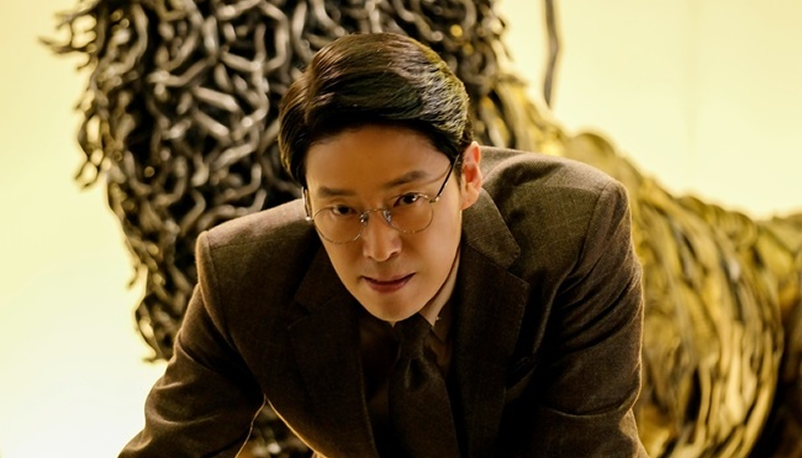
© sbs
Played by Uhm Ki-joon
The Penthouse places ambition inside Hera Palace, a luxury residential tower where wealth, status, and family expectations shape the residents’ lives. Uhm Ki-joon plays Joo Dan-tae, one of the central figures in that world.
Dan-tae fits a setting where every room and social encounter seems designed to communicate success. His polished business appearance belongs among expensive interiors and carefully maintained reputations.
The tension comes from the pressure beneath that presentation. His need to control people and situations makes resistance feel dangerous. Uhm Ki-joon’s performance gives that possessiveness a presence that suits the drama’s heightened atmosphere.
For viewers new to Korean melodrama, this is an invitation to enjoy a more theatrical style. The pleasure lies in watching characters push confrontations further while trying to maintain their place in an extravagant social world.
What drives him: Possession, dominance, and keeping others within the order he wants to impose.
Watch for: The tension between his respectable appearance and his response when control begins to slip.
Your pick if: You enjoy lavish settings, fierce confrontations, and escalating schemes.
5. Yeo Da-kyung in The World of the Married: When Desire Becomes Entitlement
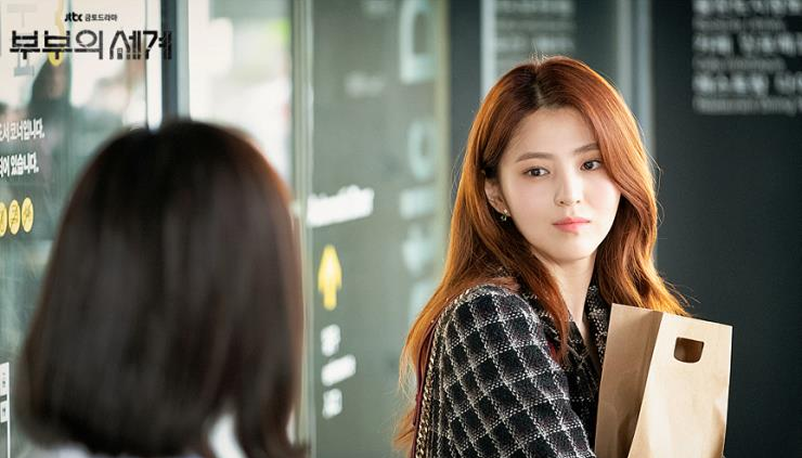
© jtbc
Played by Han So-hee
Yeo Da-kyung is involved with Lee Tae-oh, the husband of protagonist Ji Sun-woo. Their affair places her at the center of a conflict shaped by betrayal, attachment, and competing expectations. Tae-oh’s own choices remain essential to that conflict.
Da-kyung brings a more intimate kind of antagonism to this selection. Her actions hurt others, while her conviction that she is pursuing love gives her a way to justify them.
Han So-hee’s performance is interesting to follow through that tension. Confidence, defensiveness, and uncertainty offer different ways to read the character’s behavior.
In JTBC’s special interview, the actress described Da-kyung as someone whose life had been strongly directed by her parents. That provides context for her desire to make choices of her own, without removing her responsibility for those choices.
Her polished, understated styling makes the conflict feel close to everyday life. The appearance of composure becomes something to watch alongside her emotional reactions.
What drives her: Wanting her relationship to be recognized as legitimate, while treating her feelings as justification for her decisions.
Watch for: The gap between appearing certain about love and needing reassurance that she has made the right choice.
Your pick if: You prefer relationship dramas where jealousy, self-justification, and wounded pride create the tension.
What Makes These K-Drama Villains So Watchable?
Our five picks share a strong relationship between appearance, behavior, and desire.
Yeon-jin’s polished image supports her social confidence. Joo-young’s dark, restrained styling reinforces her control. Dae-hee’s formality expresses institutional authority, while Dan-tae’s presentation belongs to a world built around status. Da-kyung brings the focus into private relationships, where composure can coexist with insecurity.
Their desires give the performances direction. They want obedience, security, influence, or recognition. Once another character threatens those things, an ordinary conversation can become the most gripping scene in an episode.
They also create different viewing rhythms. You may study Joo-young’s silence, wait for Yeon-jin’s confidence to falter, or watch Da-kyung defend a choice whose consequences reach beyond herself.
For your next watch, pay attention to three details: how the character enters, how other people react, and what happens when someone says no. Those moments often reveal as much as a dramatic speech.
 Free Shipping Over
 Ships From Korea


 전체 카테고리
 Trending Searches 🔥


 ARAB EMIRATES
 AUSTRALIA
 BELGIUM
 BRAZIL
 CANADA
 DENMARK
 FINLAND
 FRANCE
 GERMANY
 GREECE
 HONG KONG
 IRELAND
 ITALY
 JAPAN
 MACAO
 MALAYSIA
 MEXICO
 MONACO
 NETHERLANDS
 NEW ZEALAND
 NORWAY
 PHILIPPINES
 QATAR
 RUSSIAN
 SAUDI ARABIA
 SINGAPORE
 SWEDEN
 SWITZERLAND
 TAIWAN
 THAILAND
 UNITED KINGDOM
 VIET NAM


