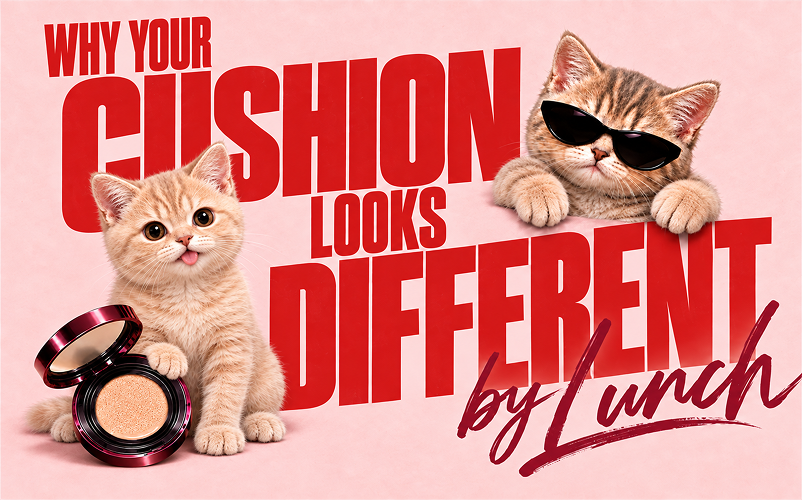
Your base looked fresh at 8 a.m. By noon, your nose is shiny, your cheeks look patchy, and another layer somehow makes everything worse.
Here’s what to check before blaming your cushion.
At 8:15 a.m., your cushion foundation looks exactly right. Your skin still looks like skin, the coverage is even, and you leave the mirror alone. Then comes the lunchtime check: missing coverage around your nose, makeup collecting near your mouth, and a forehead that looks much shinier than you remember.
The temptation is to press the puff back into the compact and start again. But first, look at what actually changed. Shine, patchiness, pilling, and a darker-looking shade are different problems—and they do not all need more foundation.
Your Nose Is Shiny, but Your Cheeks Look Dry
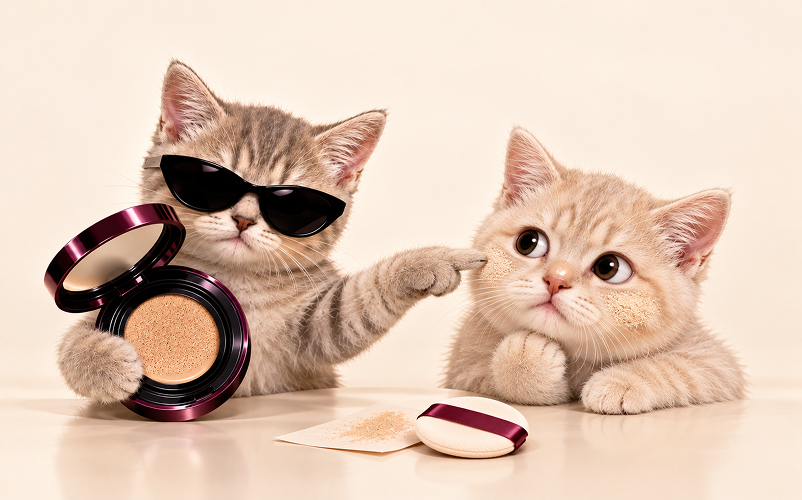
One face can have several makeup problems at once. Oil can contribute to foundation separating, while dry patches can make coverage look uneven. Applying more product everywhere gives both areas the same treatment when they may need different things.
Look closely before touching up. Has the coverage disappeared, or is it still there beneath the shine? Are your cheeks missing pigment, or is makeup clinging to texture?
For your next application, try a thinner, more even base rather than building full coverage across the entire face. L’Oréal Paris identifies excess oil, dryness, and heavy application among the factors that can affect how foundation wears.
The useful question is specific: “What happened around my nose?” tells you more than “My cushion never lasts.”
Your Cushion Foundation May Be Sitting on Too Many Layers
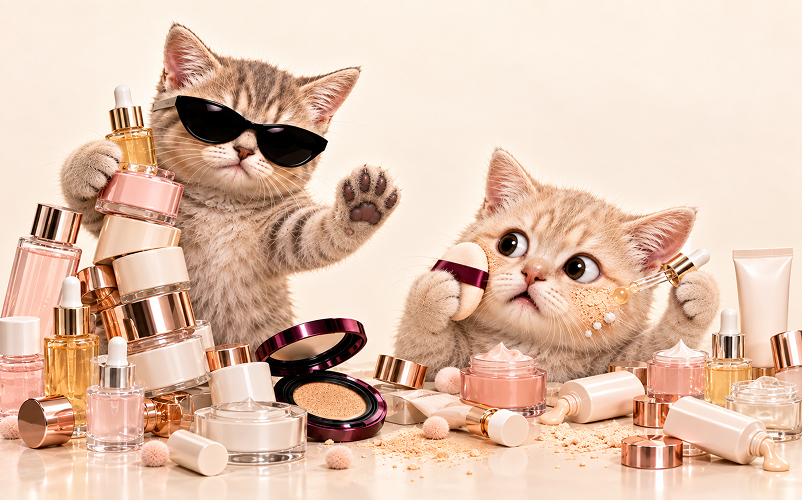
A toner, serum, cream, sunscreen, primer, and cushion can look like a perfectly organized morning routine. In practice, the amount you apply and how you layer those products matter.
If tiny rolls appear as you tap or blend, you may be seeing pilling. It can involve the products underneath your makeup, rather than the cushion alone. Heavy layers, repeated rubbing, and applying the next step before the previous one has settled are possible contributors.
Try changing one optional step at a time. On one morning, leave out the primer; on another, simplify the serums underneath. Keep your sunscreen and follow its application directions.
Changing everything at once makes it difficult to identify what helped. A small adjustment gives you a more useful answer than replacing your entire routine.
The Puff Might Be Carrying More Product Than You Need

A cushion makes topping up feel effortless. One more press, a few more taps, and the coverage returns—until you notice how much makeup has accumulated.
Try using less product on the puff and pressing gently rather than dragging it across your face. That approach also appears in makeup artist J. Brandon Correa’s cushion application advice.
For your own routine, make the first pass a checkpoint. Step back from the mirror before adding another layer. Decide where you still want coverage instead of automatically repeating the application everywhere.
The same pause helps at lunchtime. Your cheeks may still look good even if the sides of your nose need attention. A touch-up can be local.
It Looks Darker—But Is It Really Oxidation?
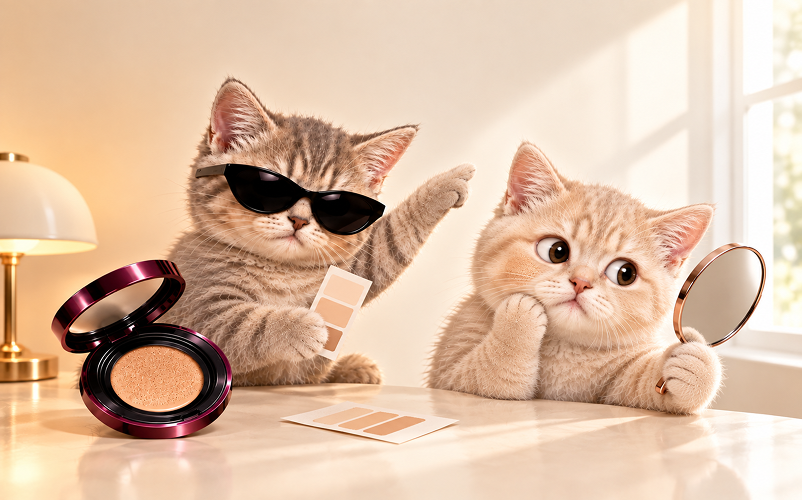
“Oxidation” has become shorthand for almost any foundation that looks different later. But a color change shortly after application can also reflect the formula drying down. An undertone mismatch or different lighting can complicate the comparison.
L’Oréal Paris recommends allowing a swatch time to settle before judging the shade and checking the face against the neck in natural light.
Before buying a lighter cushion, compare your morning and midday makeup in the same place. A bathroom mirror under warm lights and an office mirror under cooler lights are not a reliable before-and-after test.
A simple photo near the same window can help you spot whether the difference is mainly color, shine, or coverage. Keep the lighting and camera settings as consistent as possible.
How to Touch Up Cushion Foundation Without Starting Over
Think of your lunch-break routine as a small repair. Try this sequence:
Check the surface. Find the shiny areas, missing coverage, and any product collecting in creases.
Blot excess shine gently. Press a blotting sheet or tissue rather than rubbing.
Pause before adding coverage. Once the shine is reduced, reassess what actually needs makeup.
Tap a little cushion onto the gaps. Avoid automatically coating the areas that still look even.
Use powder selectively. If shine remains the issue, a small amount of oil-control powder may be more useful than another layer of pigment. Such powders are designed for setting and touch-ups with minimal added texture.
Tomorrow morning, pay attention to the first place your base changes. That is your starting point for adjusting prep, application, or touch-ups.
And when you do shop for another K-beauty base product, bring that observation with you. “I need less shine around my nose” is a much better shopping brief than “I need a perfect cushion.”
 Free Shipping Over
 Ships From Korea


 전체 카테고리
 Trending Searches 🔥


 ARAB EMIRATES
 AUSTRALIA
 BELGIUM
 BRAZIL
 CANADA
 DENMARK
 FINLAND
 FRANCE
 GERMANY
 GREECE
 HONG KONG
 IRELAND
 ITALY
 JAPAN
 MACAO
 MALAYSIA
 MEXICO
 MONACO
 NETHERLANDS
 NEW ZEALAND
 NORWAY
 PHILIPPINES
 QATAR
 RUSSIAN
 SAUDI ARABIA
 SINGAPORE
 SWEDEN
 SWITZERLAND
 TAIWAN
 THAILAND
 UNITED KINGDOM
 VIET NAM


