
That red tub deserves more than one recipe. Here’s how to make it part of the meals you already cook.
You bought gochujang for a recipe. Maybe it was bibimbap, maybe spicy rice cakes, maybe something you saved while scrolling at midnight. You used a spoonful, closed the lid, and put the rest away.
Now it is sitting in your fridge, waiting for another occasion.
The easiest way to use gochujang is to bring it into familiar meals. A sandwich, a tray of vegetables, or a bowl of noodles gives you somewhere to start. Once you understand how to adjust its concentrated flavor, that tub becomes much less mysterious.
First, Know What You Bought
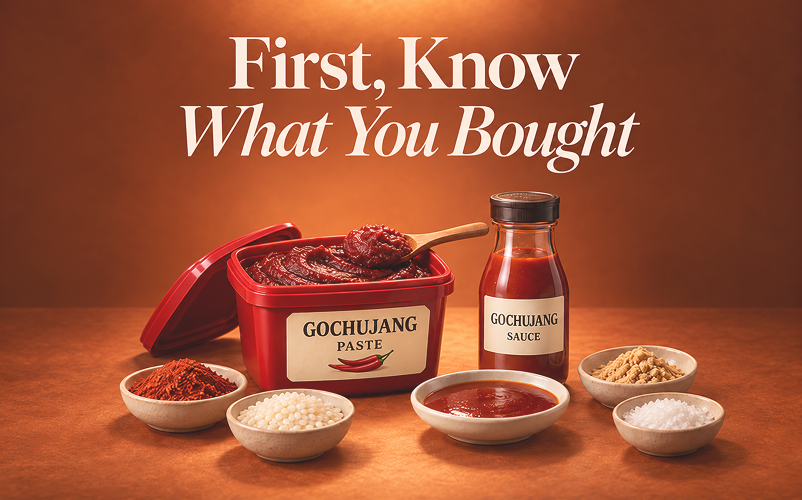
Gochujang is a thick, fermented Korean red chili paste with heat, sweetness, saltiness, and savory depth. Traditional ingredients include red chili powder, grains, fermented soybean powder, and salt, although commercial formulations vary. Maangchi’s ingredient guide introduces its role in Korean cooking.
Check whether your label says gochujang paste or gochujang sauce. Prepared sauces may already contain vinegar, sweeteners, or other
seasonings and have a thinner consistency. They will not necessarily behave like concentrated paste in a recipe.
The ideas below use paste. Think of the quantities as starting points to adjust to your brand and taste, rather than a promise that every tub has the same heat level.
1. Give Your Sandwich a Better Spread

Start with the lowest-effort option: gochujang mayo.
Mix 1 teaspoon gochujang with 2 tablespoons mayonnaise. Taste it, then add a small squeeze of lemon or lime if you want a brighter finish. For more heat, increase the paste gradually.
Spread it inside an egg sandwich, spoon it over a veggie burger, or serve it alongside roasted potato wedges. The creamy base makes it easy to introduce a little gochujang without committing your whole meal to a strong chili flavor.
For a first attempt, make only enough for one meal. You can adjust the next batch once you know whether you prefer it creamy, tangy, or more intensely seasoned.
2. Turn Roasted Vegetables Into Dinner
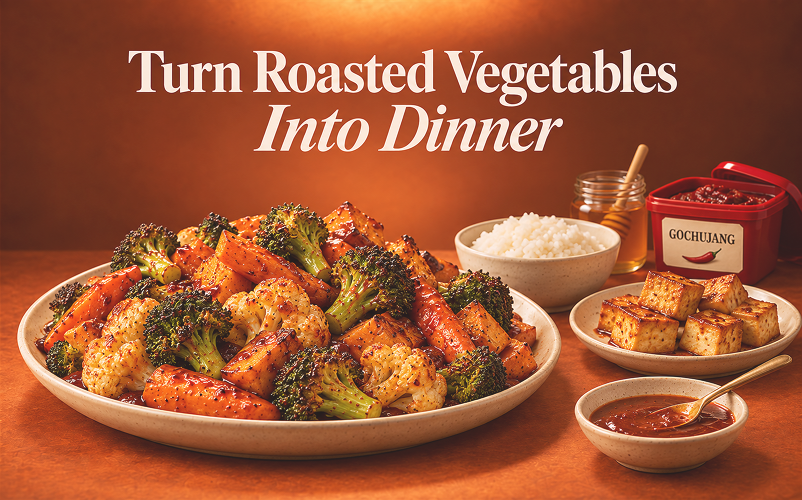
Broccoli, cauliflower, carrots, and sweet potatoes offer an easy place to experiment.
For a small tray, try mixing 1 teaspoon gochujang, 1 teaspoon honey or maple syrup, 1 teaspoon neutral oil, and 2 teaspoons water. Add more water if needed to make a loose coating.
Roast your vegetables as usual, then toss them with the mixture near the end of cooking. Return them briefly to the oven and watch closely so the sweet glaze does not burn. Taste before adding extra salt.
Serve with rice and tofu, or put the vegetables beside whatever you were already planning for dinner. These are everyday fusion ideas, so there is no need to present the finished plate as a traditional Korean dish.
3. Make a Sauce That Actually Mixes Into Rice
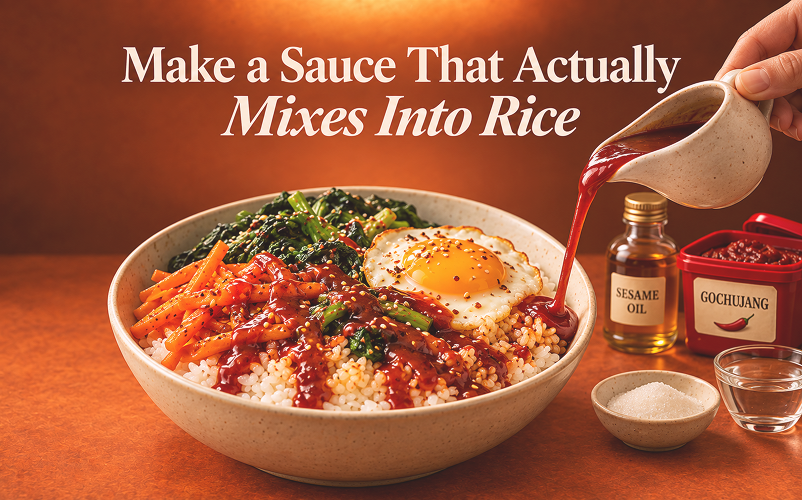
A spoonful of thick paste can sit stubbornly on top of a rice bowl. Loosening it first makes it easier to distribute.
Korean Bapsang’s bibimbap recipe suggests thinning store-bought gochujang with water and adding a little sugar and sesame oil. That is a useful starting point for understanding how a paste becomes a mixing sauce.
For your own bowl, start with 1 teaspoon gochujang, 1 teaspoon water, a few drops of toasted sesame oil, and a small pinch of sugar. Adjust, then spoon it over cooked rice, vegetables, and an egg or tofu.
Mix thoroughly before deciding you need more. A sauce tastes different on a full bowl of food than it does straight from the spoon.
4. Give Your Noodles a New Direction

When dinner is noodles and whatever vegetables you can find, gochujang can bring the components together.
For one serving, mix 1 teaspoon paste, 1 teaspoon rice vinegar, ½ teaspoon sugar, and 1 tablespoon warm water. Toss with cooked noodles and sliced cucumber or cooked vegetables. Add the sauce gradually, loosening it with more water if necessary.
Taste before reaching for soy sauce: the paste already contributes salt. If the result is too intense, add more noodles or vegetables. A little extra sugar may change the balance, but it will not remove the chili heat.
This is a flexible pantry noodle idea, not a fixed recipe for a particular Korean dish.
How to Keep the Tub Useful
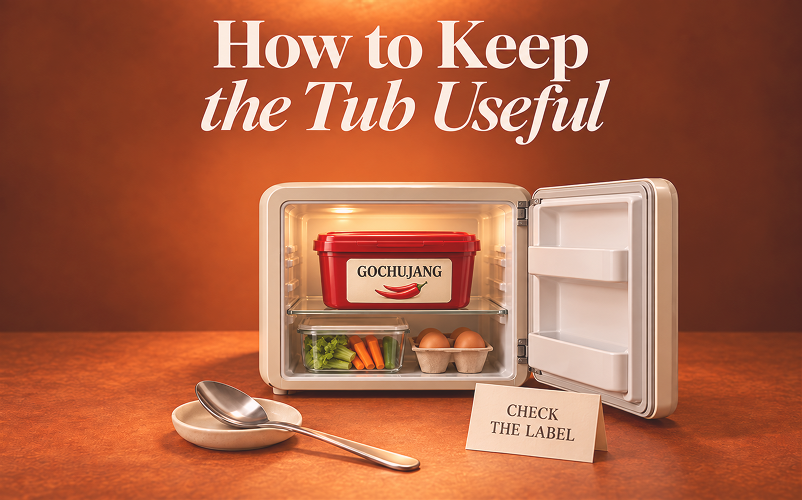
Follow the storage instructions on your package. Gochujang is commonly refrigerated after opening; use a clean utensil and close the lid securely. Avoid assigning every brand the same opened shelf life.
Check the ingredients if you have dietary requirements. Some products contain wheat, and formulations differ, so a rice-based description alone does not establish that a product is gluten-free.
For your next meal, choose just one experiment: sandwich spread, vegetable glaze, rice-bowl sauce, or noodles. You do not need four new dishes this week. You need one reason to open the tub again.
 Free Shipping Over
 Ships From Korea


 전체 카테고리
 Trending Searches 🔥


 ARAB EMIRATES
 AUSTRALIA
 BELGIUM
 BRAZIL
 CANADA
 DENMARK
 FINLAND
 FRANCE
 GERMANY
 GREECE
 HONG KONG
 IRELAND
 ITALY
 JAPAN
 MACAO
 MALAYSIA
 MEXICO
 MONACO
 NETHERLANDS
 NEW ZEALAND
 NORWAY
 PHILIPPINES
 QATAR
 RUSSIAN
 SAUDI ARABIA
 SINGAPORE
 SWEDEN
 SWITZERLAND
 TAIWAN
 THAILAND
 UNITED KINGDOM
 VIET NAM


