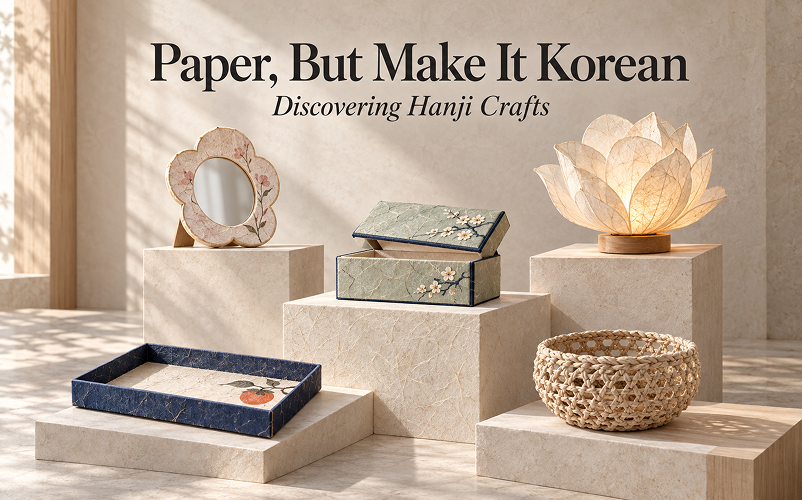
A small jewelry box. A softly glowing lamp. A basket woven from twisted paper. Once you discover hanji crafts, “made of paper” starts to mean something different.
For anyone who enjoys making things, hanji offers a hands-on introduction to Korean design. You can choose the colors, work with the material, and bring home something you helped create. Your first project might be as simple as a little tray for the rings you leave beside your bed.
Here’s what makes this Korean paper special, what a beginner project involves, and where to explore it in Korea.
What Exactly Is Hanji?
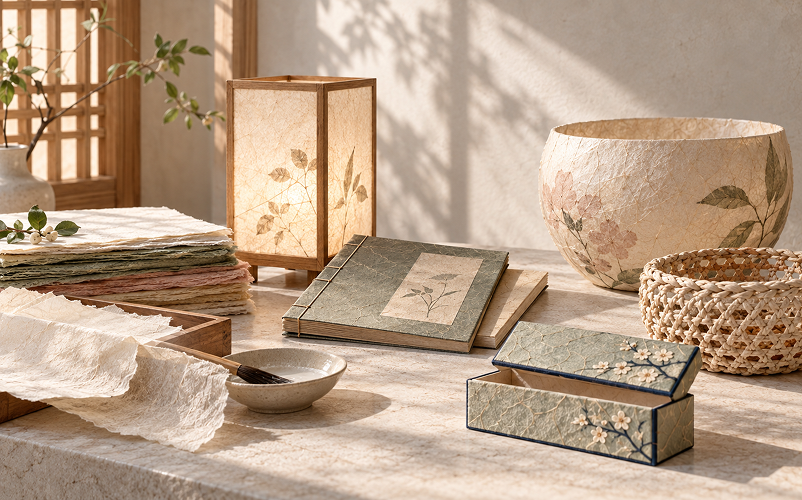
Hanji is traditional Korean paper made from the bark of the paper mulberry tree, known as dak. Historically, it served many purposes: books and paintings, window coverings, household containers, and even clothing.
Its appeal goes beyond appearance. Hanji’s interlocking fibers give it strength and flexibility, allowing craftspeople to build, layer, twist, and shape it into objects.
“Hanji crafts” also describes several different techniques. In jiseung, strips of paper are twisted into cords and woven into baskets or other vessels. In jiho, paper pulp is mixed with paste and shaped using molds. These methods show how dramatically the same material can change in a maker’s hands.
For a first attempt, a small project that involves covering a prepared base with colorful hanji is an approachable place to begin.
How Do You Make Something With Hanji?
Before booking, check what the workshop actually teaches. Making a sheet of hanji and making an object with hanji are different experiences. If you want to leave with a finished accessory, look for a class that names the object you’ll create.
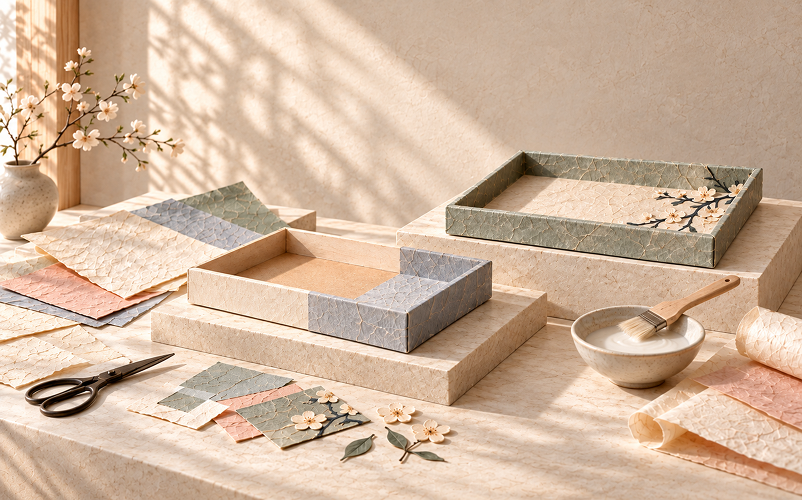
A paper-covered tray offers a useful example. A participant’s account published on Korea.net describes assembling a cardboard base, attaching precut hanji, covering the edges and surfaces, and adding a decorative pattern.
For this kind of beginner project, expect a sequence like this:
Prepare the shape. Assemble the supplied base or start with a ready-made one, depending on the kit.
Arrange your paper. Check how the pieces fit before applying adhesive. Decide which colors belong on the inside, outside, and edges.
Cover the surfaces. Attach the paper using the adhesive and technique specified by your instructor, smoothing it carefully around corners.
Add the details. Apply decorative shapes or contrasting paper, then follow the project’s drying and finishing instructions.
For your first piece, try one main color and a small accent. A simple design gives you room to concentrate on neat edges and the texture of the paper.
Where to Try Hanji Crafts in Korea
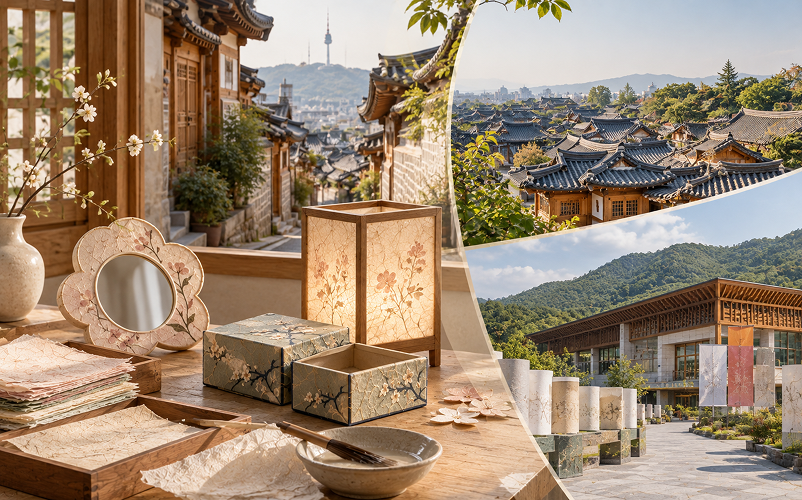
These locations appear in official tourism or city listings. Use them as starting points, and confirm the current project menu and reservation requirements before visiting.
Hanji Workshop, Seoul
If you are staying in Seoul, this Bukchon workshop offers an easy way to add a hands-on hanji experience to your itinerary. Alongside displays of traditional paper crafts, visitors can make items such as hand mirrors, jewelry boxes, and lamps using hanji. Its location near Bukchon Hanok Village also makes it convenient to combine with a day of exploring the historic neighborhood.
Address: 50 Bukchon-ro, Jongno-gu, Seoul
Look into it for: A hands-on hanji craft experience without leaving central Seoul.
Check the Hanji Workshop on Seoul’s official tourism website.
Happy Craft Shop, Jeonju
If you like the idea of making something for everyday use, this workshop is worth checking. Jeonju Hanok Village’s directory lists hanji flower mirrors, plates, pencil holders, jewelry boxes, and flower lamps, with an indicative session length of around 90 minutes.
Address: 46 Gyeonggijeon-gil, Jeonju
Look into it for: A small decorative object you can use at home.
Jeonju Crafts Exhibition Hall, Jeonju
For travelers drawn to paper lighting, the same directory lists an LED hanji light activity at the Crafts Exhibition Hall. It gives an indicative activity time of around 30 minutes, making this an option to investigate if your itinerary has limited room for a workshop.
Address: 15 Taejo-ro, Jeonju
Look into it for: A short introduction to crafting with hanji.
Check both venues in the official Jeonju Hanok Village craft directory.
Wonju Hanji Theme Park, Wonju
Want to understand the material as well as make something? Wonju’s dedicated hanji facility combines exhibitions with craft experiences. The city lists projects including hand mirrors, pencil cases, jewelry boxes, and paper dolls, alongside spaces introducing hanji’s history.
Address: 151 Hanjigongwon-gil, Wonju
Look into it for: Combining a craft session with a closer look at Korea’s paper traditions.
Explore Wonju City’s official visitor information.
A Few Questions Before You Book
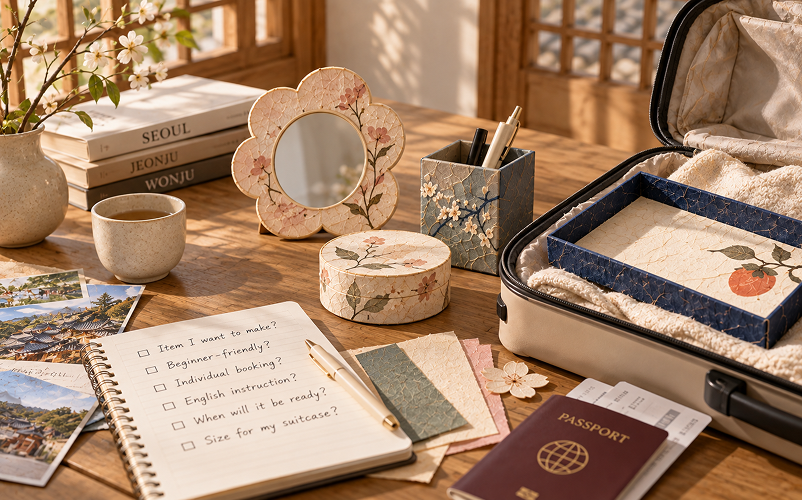
Send the workshop the name or photo of the item you want to make. Ask whether beginners can complete it during the session, whether an individual booking is possible, and whether instruction or written guidance is available in English.
Also ask when the finished piece will be ready to pack. If you’re traveling with a small suitcase, choose the project with that space in mind. A compact mirror or tray may be easier to bring home than a large lamp.
Think about where you’ll put it, too. A pencil holder beside your laptop or a little box for favorite earrings gives the experience a place in your daily routine.
Long after the trip, you’ll still recognize the color you chose—and the corner that took a little extra patience.
 Free Shipping Over
 Ships From Korea


 전체 카테고리
 Trending Searches 🔥


 ARAB EMIRATES
 AUSTRALIA
 BELGIUM
 BRAZIL
 CANADA
 DENMARK
 FINLAND
 FRANCE
 GERMANY
 GREECE
 HONG KONG
 IRELAND
 ITALY
 JAPAN
 MACAO
 MALAYSIA
 MEXICO
 MONACO
 NETHERLANDS
 NEW ZEALAND
 NORWAY
 PHILIPPINES
 QATAR
 RUSSIAN
 SAUDI ARABIA
 SINGAPORE
 SWEDEN
 SWITZERLAND
 TAIWAN
 THAILAND
 UNITED KINGDOM
 VIET NAM


