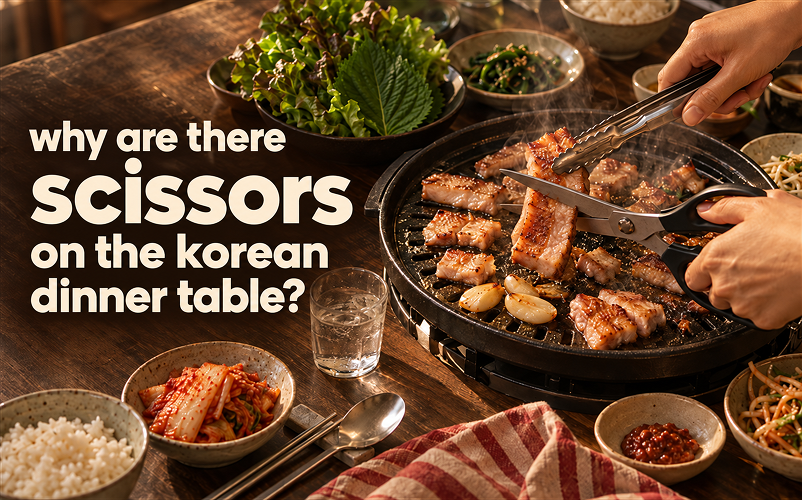
The grill is sizzling. Small plates of side dishes fill the table. Then someone picks up a pair of scissors and starts cutting the meat.
If it’s your first Korean barbecue experience, that moment might catch you off guard. You may have kitchen shears at home, but seeing them used right where everyone is eating feels different.
In Korea, food scissors are a familiar tool for cutting barbecue, kimchi, and cold noodles. Korea.net even features these uses in its introduction to “K-Scissors.” Once you see them in action, the idea starts to make practical sense.
The question quickly becomes: what else could you use them for?
Cut the Food Where It Is
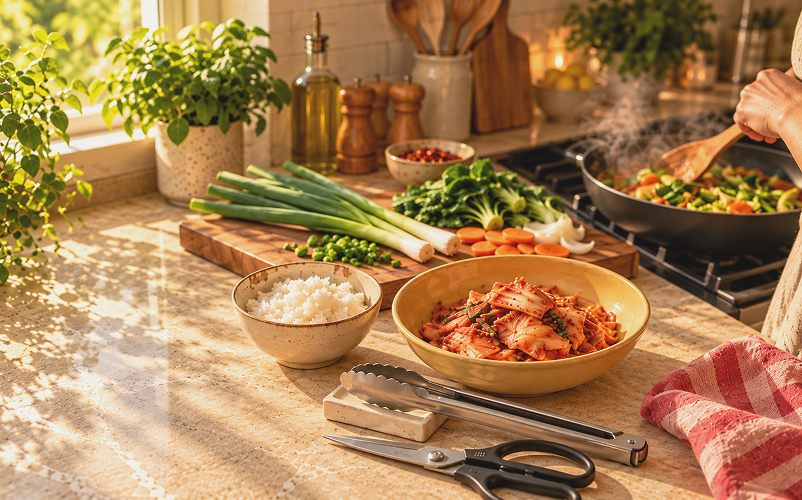
Think about the usual sequence for cutting something: move it to a board, hold it steady, slice it, and transfer it back.
Kitchen scissors offer another approach. With suitable food held securely in tongs, you can cut portions directly over a plate, bowl, or cooking surface. The two blades meet around the food, so you don’t need to press a knife against a cutting board.
That is especially useful when a meal involves larger pieces that need dividing as people eat. You can adjust the size of each piece without moving the whole dish away from the table.
It also explains why scissors and tongs make such a useful pair. One holds; the other cuts.
Three Foods That Explain the Habit
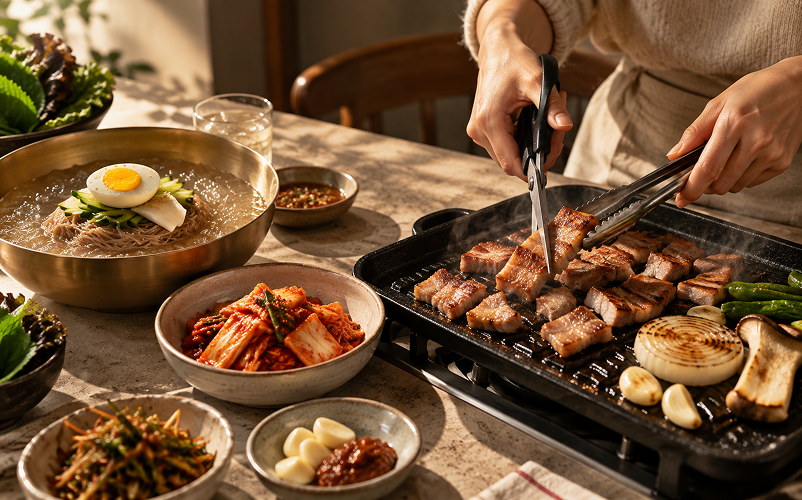
Korean Barbecue
At a Korean barbecue table, scissors make it easy to divide larger pieces of meat into manageable bites.
The person handling the grill can lift a piece with tongs and snip it into portions. It’s a direct, visible part of preparing the shared meal, happening alongside turning the meat and deciding what’s ready.
For someone used to receiving an individually plated steak, this can feel like a different rhythm of dining. Preparing and sharing the food happen in the same space.
Kimchi
Long pieces of cabbage kimchi can be awkward to portion with a knife when they’re already in a bowl.
Scissors let you cut them into smaller pieces over the serving dish. For a simple home application, transfer the amount you plan to eat into a bowl, hold it with clean tongs, and snip it to your preferred size.
It’s particularly handy when you want small pieces to mix into rice or add to a sandwich.
Cold Noodles
A bowl of naengmyeon, Korean cold noodles, is another place you may encounter scissors.
A few cuts can shorten the noodles and make them easier to manage with chopsticks. How much you cut is a matter of preference. If you enjoy longer strands, start with less—you can always make another cut.
Barbecue, kimchi, and cold noodles are all examples documented in Korea.net’s overview of the practice.
Bring the Idea Into Your Own Kitchen
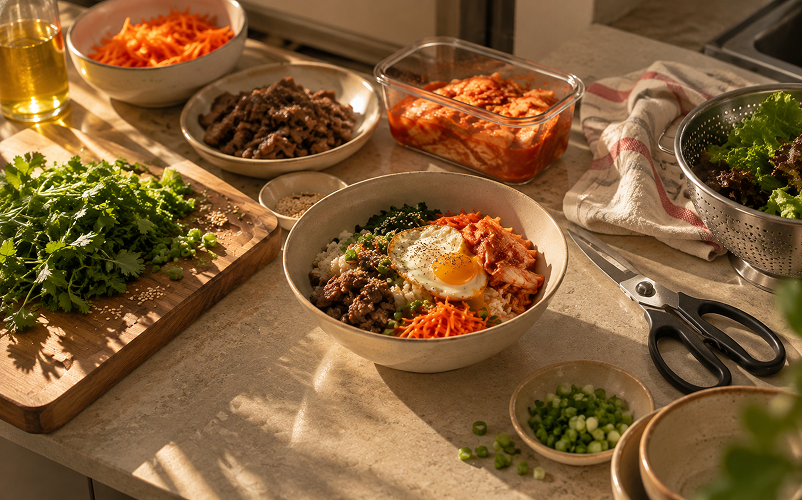
You don’t need a tabletop grill to try this approach.
Start with a task you already find slightly inconvenient. Snip herbs over a bowl. Cut suitable cooked, boneless meat into smaller portions with clean shears. Divide kimchi without taking out a cutting board.
Kitchen-shear manufacturers also describe uses such as cutting slippery foods and snipping herbs, so the tool can earn its place well beyond Korean dishes.
For a first experiment, make a simple rice bowl. Put cooked rice in a bowl, add your chosen toppings, and use food scissors to portion the kimchi separately before adding it. You’ll quickly learn whether the method suits the way you cook.
The goal is to find the tasks where scissors feel comfortable and give you useful control.
What Makes a Pair Worth Using?
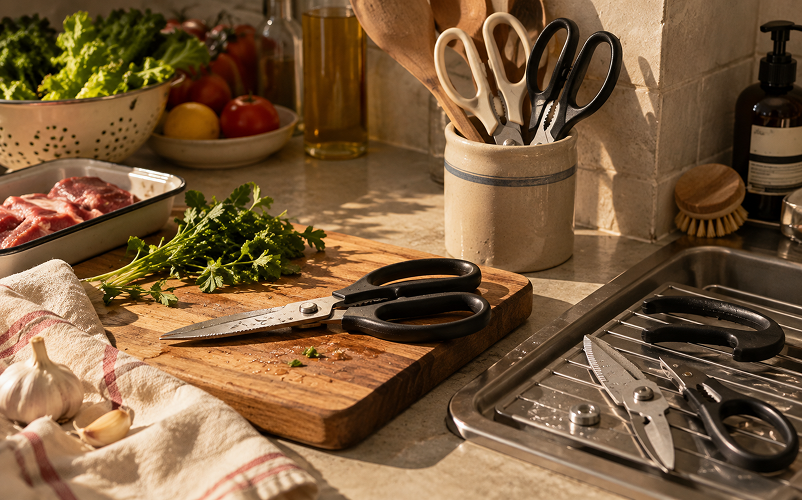
Choose scissors intended for food preparation, and consider how they feel in your hand.
Can you open and close them comfortably? Do you have enough control for small cuts? Will the blade length suit the foods you regularly prepare?
Check the manufacturer’s instructions for cleaning and intended use. Some models come apart for cleaning; others do not. Dishwasher compatibility also varies. Don’t assume ordinary kitchen shears are designed to cut bones or frozen food.
Keep food scissors separate from the pair used for crafts and packages. As with knives and cutting boards, clean them thoroughly after handling raw meat before using them on cooked or ready-to-eat food.
A Small Change in How You Cook
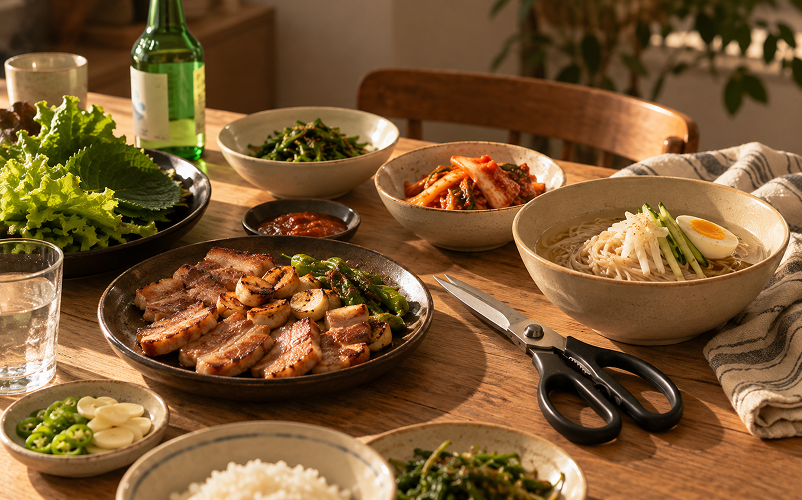
The appeal of Korean food scissors becomes clear the moment you use them for the right task. The kimchi stays over the bowl. The meat becomes a bite-sized piece. The noodles become easier to pick up.
It’s a familiar tool, given a more visible role in the meal.
The next time scissors arrive beside your chopsticks, you’ll know what they’re doing there. And when you get home, you may find yourself reaching for your own pair a little more often.
 Free Shipping Over
 Ships From Korea


 전체 카테고리
 Trending Searches 🔥


 ARAB EMIRATES
 AUSTRALIA
 BELGIUM
 BRAZIL
 CANADA
 DENMARK
 FINLAND
 FRANCE
 GERMANY
 GREECE
 HONG KONG
 IRELAND
 ITALY
 JAPAN
 MACAO
 MALAYSIA
 MEXICO
 MONACO
 NETHERLANDS
 NEW ZEALAND
 NORWAY
 PHILIPPINES
 QATAR
 RUSSIAN
 SAUDI ARABIA
 SINGAPORE
 SWEDEN
 SWITZERLAND
 TAIWAN
 THAILAND
 UNITED KINGDOM
 VIET NAM


