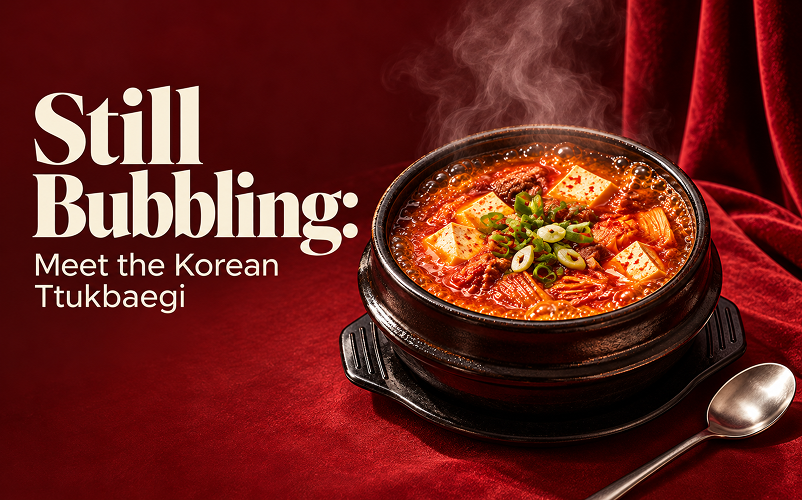
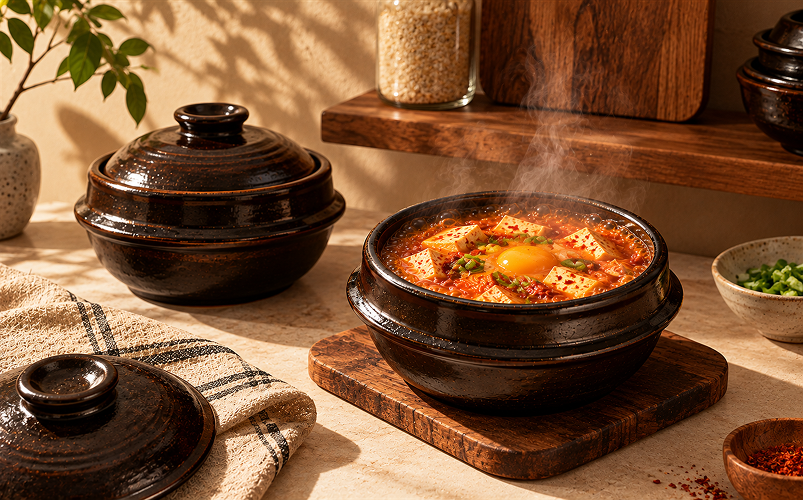
Your stew has reached the table, but it hasn’t stopped bubbling. Beneath the rising steam is a small, dark pot called a ttukbaegi (뚝배기). It’s one of the most recognizable sights in a Korean restaurant: the cooking vessel arrives as the serving bowl, keeping the food hot while everyone reaches for a spoon. But is it a clay pot, a stone bowl, or something else entirely? And could you use one at home?
What is a ttukbaegi?
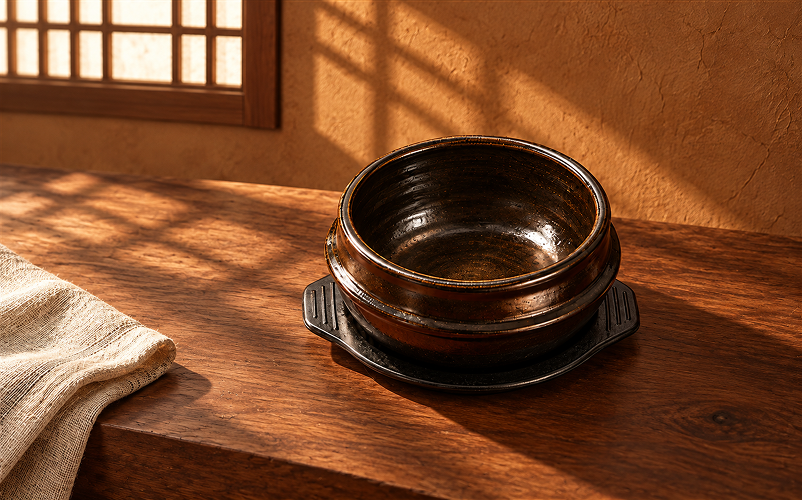
A ttukbaegi is a Korean earthenware pot commonly used for hot soups and stews. Its thick walls hold heat, so a dish can arrive at the table still visibly simmering. The Korea Tourism Organization describes seafood stew served in one; the pot is part of the meal’s presentation, not just a way to cook it.
That last burst of bubbles makes an impression, but it also calls for a little patience. Set the pot on a suitable trivet, keep hands away from its sides, and give the first spoonful a moment to cool.
Ttukbaegi or dolsot?
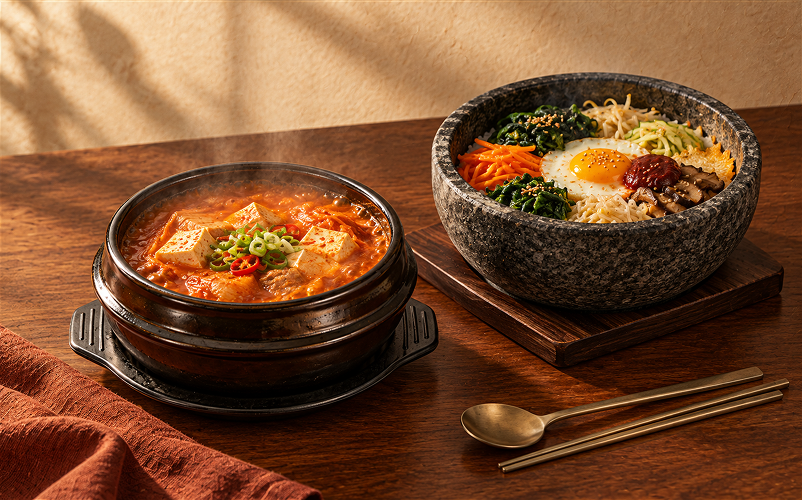
The two are easy to confuse when they’re filled with food. A ttukbaegi is earthenware, typically associated with stews, soups, and dishes such as steamed eggs. A dolsot is a stone bowl closely associated with dolsot bibimbap: rice served so hot that the grains touching the bowl can turn crisp. Korea.net’s guide to dolsot bibimbap describes that crispy rice as part of the appeal.
Think about what you want the vessel to do. For a spoonful of bubbling broth, picture a ttukbaegi. For rice with a crackling bottom layer, picture a dolsot. Their dark color and table-side heat may look similar, but their materials and familiar uses differ.
What goes into one?
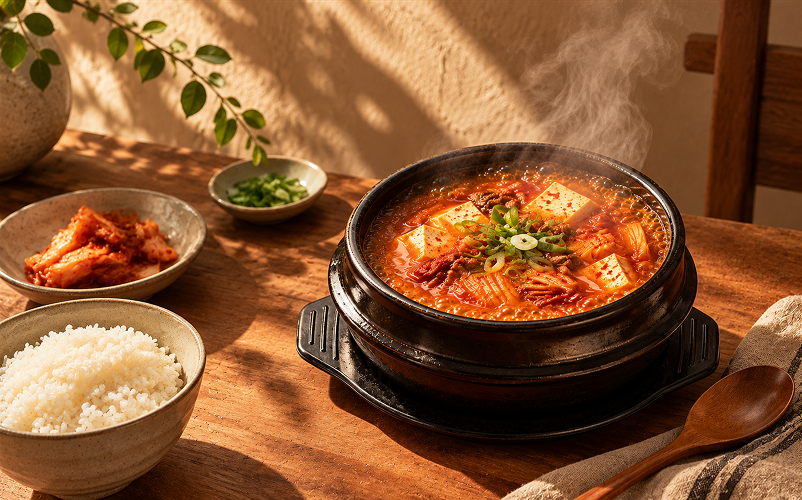
Jjigae is a natural place to start. Kimchi jjigae brings its tangy broth to the table still steaming; doenjang jjigae offers a savory, comforting alternative. Seafood stew is another example. The pot works especially well for the moment when a hot, generous spoonful feels like the whole point of the dish.
Then there’s gyeran-jjim, Korean steamed eggs. Instead of broth, you get a soft, fluffy dish that rises above the rim. Hankook Chinaware’s gyeran-jjim recipe uses a ttukbaegi and notes how it stays warm from stove to table. It’s a reminder that this little pot can do more than stew.
Want to try one at home? Read the product details first
“Ttukbaegi” tells you the style of pot, not which appliances a particular model supports. For example, MiM’s earthenware ttukbaegi is listed for gas and electric cooktops but not induction, and its maker calls for handwashing. By contrast, the Lihan Noa ttukbaegi is listed as induction-compatible and dishwasher-safe.
Before buying, check your cooktop, the pot’s capacity, and the maker’s cleaning and first-use instructions. Don’t assume every clay pot needs the same seasoning or can go in the dishwasher. Let a hot pot cool as directed before washing it; MiM, for instance, warns that a sudden temperature change can cause cracking.
You don’t need a ttukbaegi to enjoy Korean stew. But once you’ve seen a pot arrive with its contents still gently rolling, you understand its charm: the meal comes to the table with its warmth, sound, and anticipation intact.
 Free Shipping Over
 Ships From Korea


 전체 카테고리
 Trending Searches 🔥


 ARAB EMIRATES
 AUSTRALIA
 BELGIUM
 BRAZIL
 CANADA
 DENMARK
 FINLAND
 FRANCE
 GERMANY
 GREECE
 HONG KONG
 IRELAND
 ITALY
 JAPAN
 MACAO
 MALAYSIA
 MEXICO
 MONACO
 NETHERLANDS
 NEW ZEALAND
 NORWAY
 PHILIPPINES
 QATAR
 RUSSIAN
 SAUDI ARABIA
 SINGAPORE
 SWEDEN
 SWITZERLAND
 TAIWAN
 THAILAND
 UNITED KINGDOM
 VIET NAM


