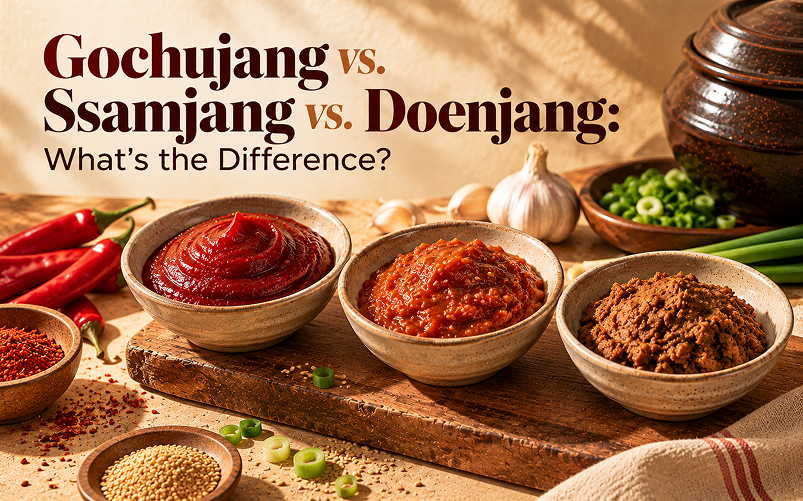
If you've ever wandered through the Korean food aisle at an Asian grocery store, you've probably noticed colorful tubs of thick pastes lined up on the shelves. Some are bright red, others are deep brown, and many look surprisingly similar.
Three names you'll encounter are gochujang, ssamjang, and doenjang. They're essential to Korean cooking, but despite their similar appearance, each brings something different to the table.
One adds a sweet, spicy kick. Another delivers deep, savory richness. The third brings those flavors together in a sauce made for wrapping and dipping.
So, which one should you reach for? Here's how to tell them apart and find the right one for your next Korean-inspired meal.
Meet the Three Korean Pastes
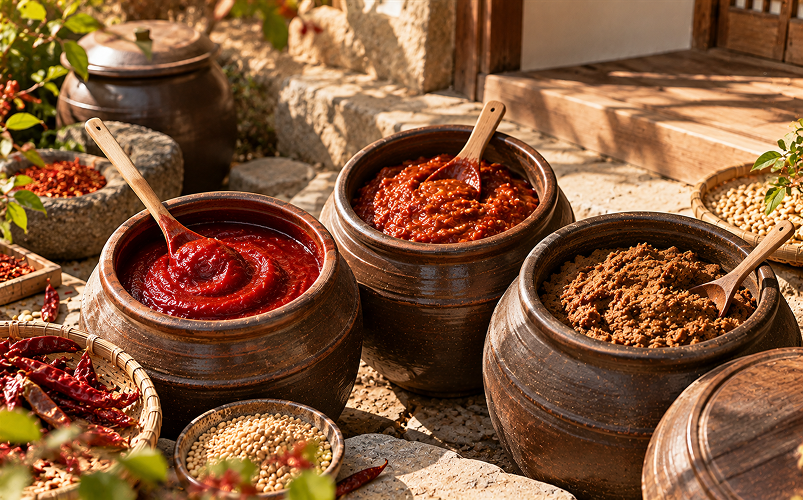
Before exploring each one, it helps to understand the word jang (장).
In Korean cuisine, jang refers to a family of fermented sauces and pastes that form the foundation of countless dishes. Traditional varieties have been made using fermented soybeans, grains, salt, and other ingredients.
Gochujang and doenjang are fermented pastes, while ssamjang is typically a seasoned mixture made using already-fermented ingredients.
Here's a quick comparison.
| Gochujang | Ssamjang | Doenjang |
|---|
| Korean name | 고추장 | 쌈장 | 된장 |
| Main flavor | Spicy, sweet, savory | Savory, nutty, mildly spicy | Salty, earthy, umami-rich |
| Main ingredients | Chili powder, fermented soybeans, grains | Doenjang, often gochujang, and seasonings | Fermented soybeans, salt |
| Common uses | Bibimbap, tteokbokki, marinades | Korean BBQ, lettuce wraps, vegetable dips | Soups, stews, vegetable dishes |
| Spicy? | Usually yes | Varies, often mildly | Traditionally no |
Although they share some ingredients, their flavors and uses are quite different.
Gochujang: The Sweet and Spicy One
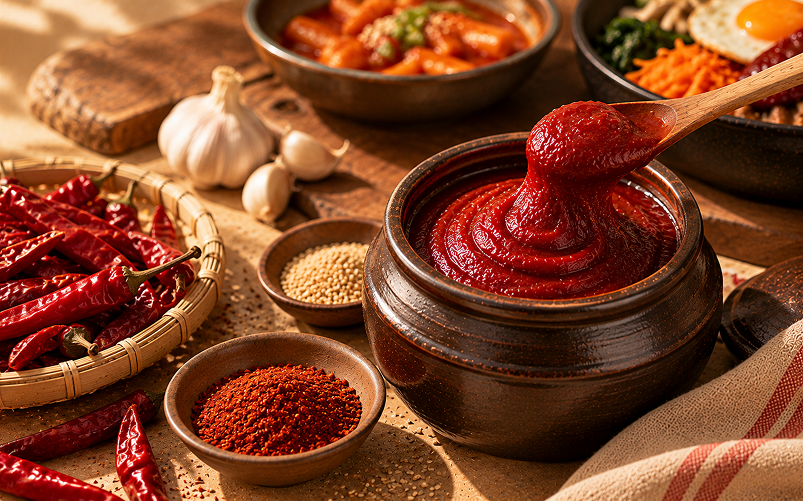
If you've tried Korean dishes with a rich, reddish sauce, there's a good chance you've tasted gochujang (고추장).
This fermented Korean chili paste is traditionally made with Korean red pepper powder, fermented soybean ingredients, grains such as glutinous rice, and salt.
Unlike ordinary hot sauce, gochujang has a thick, concentrated texture. Its flavor combines chili heat with sweetness, saltiness, and the depth that comes from fermentation.
The result is a paste that does more than make food spicy.
Where you'll find it
Gochujang is an important ingredient in several familiar Korean dishes.
Bibimbap: Mixed with rice, vegetables, and other ingredients to add a spicy, savory finish.
Tteokbokki: Helps create the signature red sauce coating chewy Korean rice cakes.
Spicy marinades: Adds flavor to grilled meats, tofu, and stir-fried dishes.
Try it at home
For an easy introduction, mix a small amount of gochujang with sesame oil, a little sweetener, and water to create a simple sauce for rice bowls.
Start with less than you think you need. Different brands offer different levels of sweetness and heat.
Doenjang: The Deep and Savory One
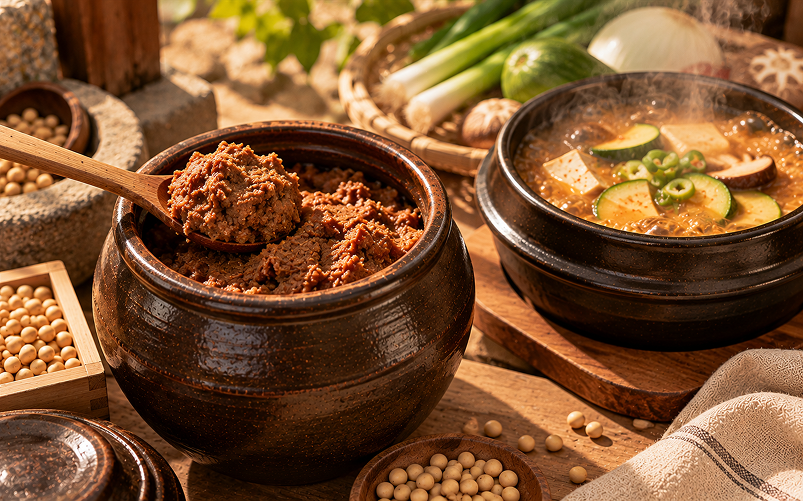
While gochujang brings heat, doenjang (된장) is all about savory depth.
Doenjang is a traditional Korean fermented soybean paste made primarily from soybeans and salt. It has a thick, sometimes slightly coarse texture and a strong, earthy aroma.
If you've used Japanese miso before, the idea might sound familiar. Both are fermented soybean seasonings, but their ingredients, fermentation methods, and flavors can differ considerably.
Doenjang often has a more pronounced fermented flavor and a saltier, earthier character than many commonly available miso pastes.
Where you'll find it
One of the best-known dishes featuring doenjang is doenjang jjigae, a comforting Korean soybean paste stew.
It commonly includes tofu, zucchini, onions, and other vegetables simmered in a deeply savory broth.
Doenjang also appears in soups, seasoned vegetable dishes, and dipping sauces.
Try it at home
Add a small spoonful of doenjang to a pot of simmering water or broth with tofu and vegetables.
Stir until the paste is well incorporated, then taste before adding any additional salt.
Because doenjang is already quite salty, a little can go a long way.
Ssamjang: The Perfect Korean BBQ Companion
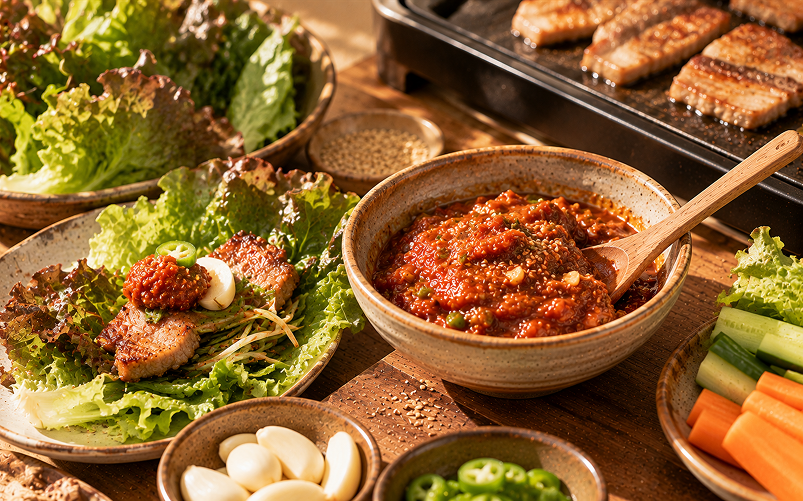
Ever wondered what that thick brownish-red sauce served alongside Korean BBQ is?
It's often ssamjang (쌈장).
The name gives away its purpose: ssam means wrap, while jang means paste or sauce.
Ssamjang is commonly made by combining doenjang and gochujang with ingredients such as garlic, sesame oil, green onions, and a little sweetness.
Rather than being a single fermented paste, it's a seasoned condiment that brings several flavors together.
The result is savory, slightly sweet, nutty, and sometimes mildly spicy.
Where you'll find it
Ssamjang is especially popular with Korean BBQ.
Imagine placing a piece of freshly grilled meat inside a crisp lettuce leaf, adding some rice and a small dab of ssamjang, then folding everything into a bite-sized wrap.
That combination is called ssam, and the sauce helps bring the different ingredients together.
But ssamjang isn't limited to grilled meat. It also pairs well with fresh cucumber sticks, carrots, and other vegetables.
Try it at home
You can make a simple version using ingredients you may already have.
Mix two teaspoons of doenjang with one teaspoon of gochujang, a little sesame oil, minced garlic, and a pinch of sugar or another sweetener.
Adjust the proportions to suit your taste.
Can You Use Them Interchangeably?
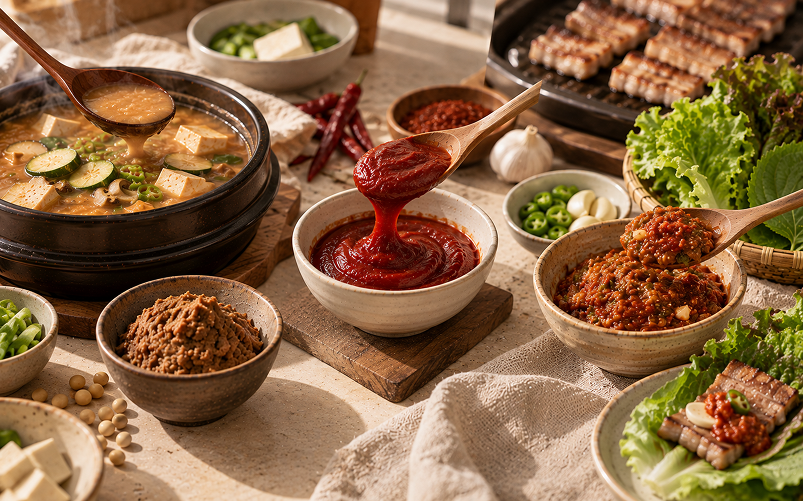
Not exactly.
Although these Korean pastes share some ingredients, substituting one for another can noticeably change the flavor of a dish.
For example, replacing doenjang with gochujang in a traditional soybean paste stew would introduce chili heat and sweetness, changing the character of the broth.
Likewise, using plain doenjang instead of ssamjang as a Korean BBQ dip would give you a much saltier, less rounded flavor.
If you're missing ssamjang, however, you can often make a quick substitute by mixing doenjang and gochujang with a few seasonings.
The key is understanding what each paste contributes rather than assuming they're simply different versions of the same sauce.
Which Korean Paste Should You Buy First?
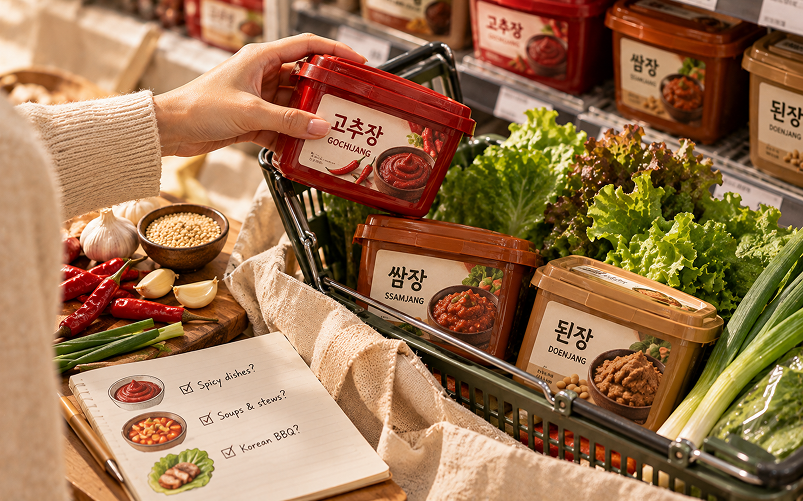
You don't need all three to start experimenting with Korean cooking.
Instead, think about the dishes you enjoy most.
Love spicy Korean food?
Start with gochujang. It's a useful ingredient for spicy rice bowls, marinades, and Korean-inspired sauces.
Prefer comforting soups and stews?
Choose doenjang. Its fermented soybean flavor adds richness to simple combinations of vegetables and tofu.
Planning Korean BBQ at home?
Ssamjang is an easy place to begin. It's generally ready to serve straight from the container, making it convenient for lettuce wraps and vegetable dipping.
If you eventually buy both gochujang and doenjang, you'll also have the foundation for making your own ssamjang.
A Few Things to Check Before Buying
When shopping for Korean pastes in the United States or Canada, pay attention to more than the product name.
Some brands sell traditional concentrated pastes, while others offer ready-to-use sauces with additional seasonings.
For example, a bottle labeled gochujang sauce may have a thinner consistency and different sweetness or spice level than concentrated gochujang paste.
Ingredients can vary, too. Some products contain wheat, and soybean ingredients are common. Certain seasoned sauces may also contain seafood-derived ingredients.
If you have food allergies or follow a particular diet, check the ingredient and allergen information carefully.
Storage instructions also depend on the product. Follow the manufacturer's directions, especially after opening.
Three Pastes, Three Different Flavors
At first glance, gochujang, ssamjang, and doenjang might seem like variations of the same Korean condiment.
But once you taste them, their differences become clear.
Gochujang brings sweetness and heat. Doenjang adds deep, fermented savoriness. Ssamjang combines those flavors into a seasoned dip that's particularly good with Korean BBQ.
Together, they offer a glimpse into the variety of flavors that make Korean cooking so distinctive.
And the next time you're standing in front of those colorful tubs at the grocery store, you'll know exactly which one belongs in your basket.
 Free Shipping Over
 Ships From Korea


 전체 카테고리
 Trending Searches 🔥


 ARAB EMIRATES
 AUSTRALIA
 BELGIUM
 BRAZIL
 CANADA
 DENMARK
 FINLAND
 FRANCE
 GERMANY
 GREECE
 HONG KONG
 IRELAND
 ITALY
 JAPAN
 MACAO
 MALAYSIA
 MEXICO
 MONACO
 NETHERLANDS
 NEW ZEALAND
 NORWAY
 PHILIPPINES
 QATAR
 RUSSIAN
 SAUDI ARABIA
 SINGAPORE
 SWEDEN
 SWITZERLAND
 TAIWAN
 THAILAND
 UNITED KINGDOM
 VIET NAM


