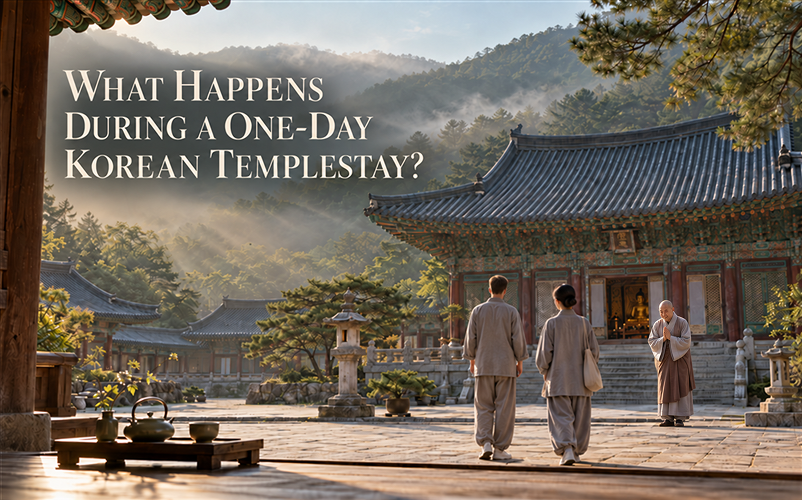
A few streets away, the city is still rushing. Inside the temple gate, someone asks you to slow down, lower your voice, and notice where you are. That change of pace is part of a Korean Templestay: a chance to experience aspects of Buddhist temple life as a visitor, even if you have never meditated before.
Despite the name, you do not have to sleep at a temple. The official Templestay guide says a typical one-day program lasts about two to three hours. An overnight stay offers a fuller schedule, which may include evening and early-morning activities. Here is what a shorter visit can look like—and how to choose one that suits you.
First, Learn How to Enter the Space
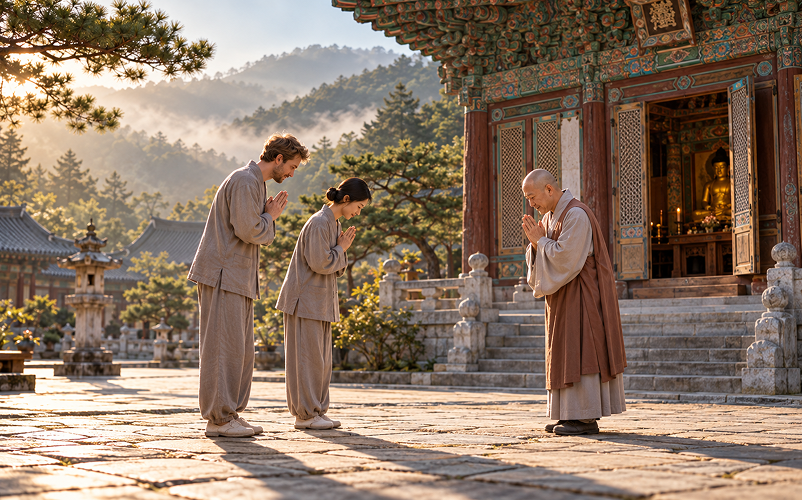
Many programs begin with an introduction to the temple and its etiquette. A guide may explain the buildings, show visitors where to walk, and demonstrate how to greet a monk by placing the palms together and making a small bow.
There is no need to arrive knowing every custom. Listening to the instructions is part of the experience. The point is to remember that the temple is an active place of worship and practice, not simply a scenic stop on a travel itinerary.
You may be asked to speak quietly and dress modestly. Bring socks, as some temple halls do not allow bare feet. Individual temples set their own guidelines, so read the instructions for your chosen program before visiting. Bongeunsa’s visitor guidance is one example.
Then, Try Being Still
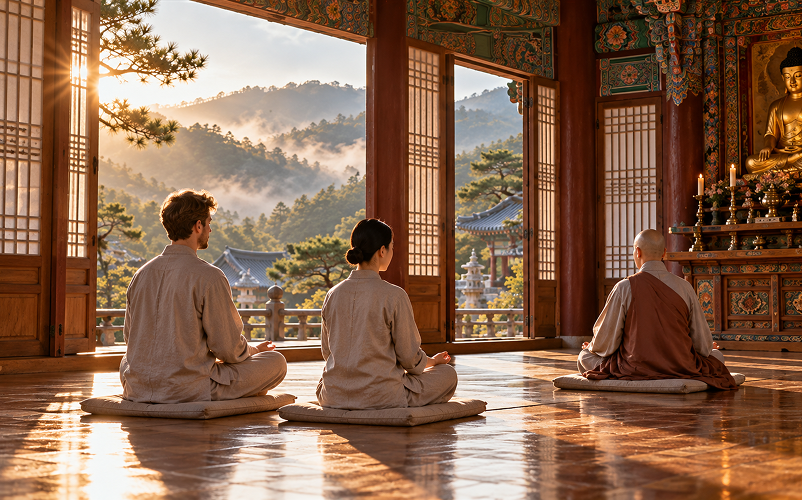
Meditation is often the moment people imagine when they hear “Templestay.” You might sit quietly, follow your breathing, or spend time noticing the sounds around you. It is easy to assume that doing it well means having an empty mind. A first visit is better approached with curiosity: follow the guide, and notice when your attention wanders.
Some one-day programs pair meditation with a temple tour or tea ceremony. Others focus on a particular activity. At Jogyesa in central Seoul, for example, the current program listings include a one-day tea experience as well as other short visits. A Templestay is therefore less like buying a standard tour ticket and more like choosing a class: check what the session actually includes before you book. Browse Jogyesa’s programs.
Will You Eat Temple Food?
Possibly—but a meal is not guaranteed on a one-day visit. Check the schedule if trying temple food is important to you. Some programs include a meal; others are centered on tea, meditation, or a cultural activity.
When a meal is included, eating is part of the practice rather than a break from it. Temple guidance commonly asks participants to take only what they can finish and treat the food with care. A longer, experience-oriented stay may also introduce visitors to balwoo gongyang, a traditional Buddhist meal using a set of bowls. The Korea Tourism Organization’s Templestay guide explains how activities vary between programs.
Should You Stay Overnight Instead?
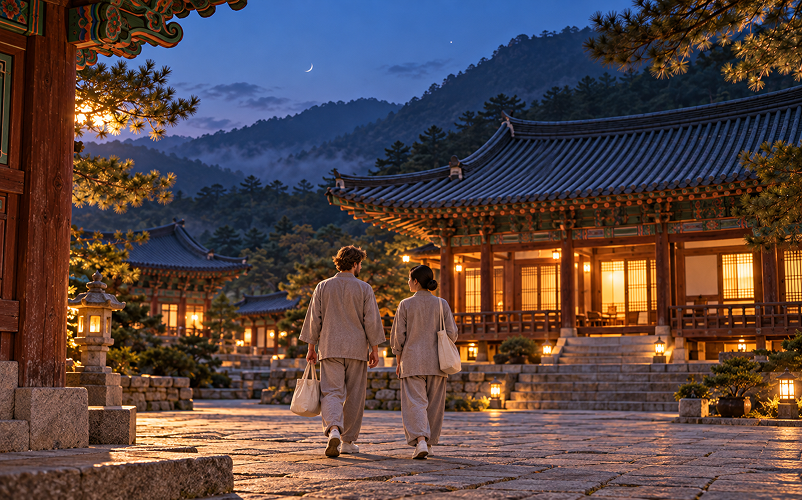
Choose a short program if you want an introduction that fits into a day of sightseeing. Consider an overnight stay if you want to experience more of the temple’s daily rhythm. Depending on the temple, that may mean chanting, meditation, a shared meal, or waking early enough to see the grounds before the surrounding city gets busy.
There is also a choice between experience-oriented stays, which have more scheduled activities, and rest-oriented stays, which leave more time to pause. Neither is the “proper” way to do a Korean Templestay. The better choice is the one whose schedule you would actually enjoy.
How to Plan Your First Visit
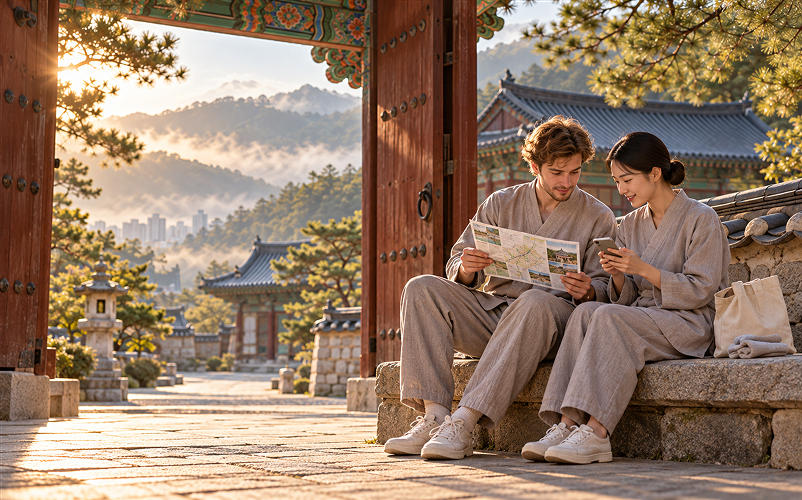
Start with the official Templestay temple list and filter for one-day programs or a region on your route. Read the individual listing for language support, meeting time, clothing, meals, and reservation requirements. Availability and activities can change by temple and date.
You can arrive with questions about Buddhism, or simply with an interest in experiencing a different pace of life. Either way, leave room in your schedule afterward. The most memorable part may be what you notice when you step back outside.
 Free Shipping Over
 Ships From Korea


 전체 카테고리
 Trending Searches 🔥




 ARAB EMIRATES
 AUSTRALIA
 BELGIUM
 BRAZIL
 CANADA
 DENMARK
 FINLAND
 FRANCE
 GERMANY
 GREECE
 HONG KONG
 IRELAND
 ITALY
 JAPAN
 MACAO
 MALAYSIA
 MEXICO
 MONACO
 NETHERLANDS
 NEW ZEALAND
 NORWAY
 PHILIPPINES
 QATAR
 RUSSIAN
 SAUDI ARABIA
 SINGAPORE
 SWEDEN
 SWITZERLAND
 TAIWAN
 THAILAND
 UNITED KINGDOM
 VIET NAM


