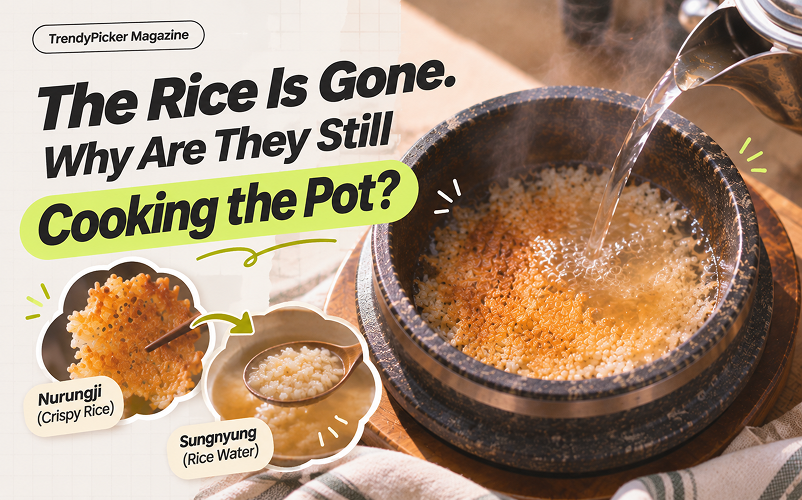
At a Korean restaurant, someone lifts the fluffy rice out of a hot stone pot and puts it into a separate bowl. Then they pour water into the nearly empty pot and close the lid. It can look as though the meal is over and the pot still needs cleaning. In fact, they are saving its best surprise: the golden rice stuck to the bottom.
That toasted layer is nurungji, or Korean scorched rice. Add hot water and it softens into sungnyung, a warm, lightly nutty finish to the meal. Here is what is happening in the pot—and how to enjoy both.
What Is Nurungji?
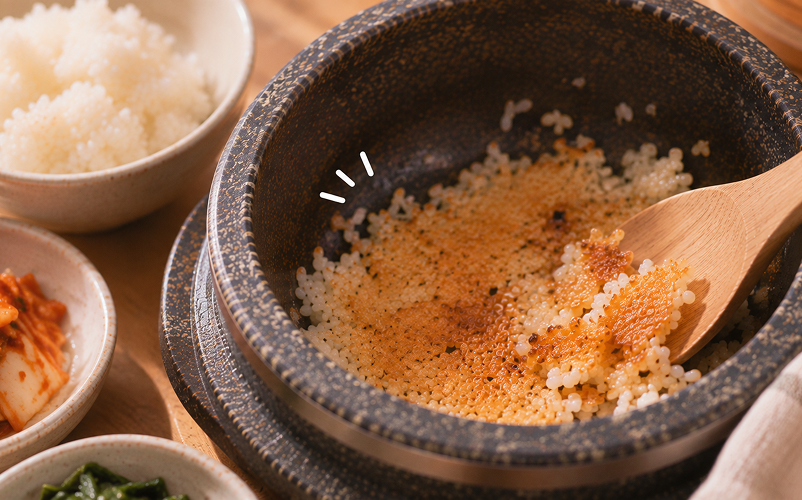
When rice cooks against the bottom of a hot pot, some grains can turn firm and golden. That crisp layer is nurungji. It has a roasted aroma and a texture entirely different from the soft rice above it. You can scrape it off and eat it crunchy, or let it soften in water.
The Korea Tourism Organization’s guide to nurungji describes both ways of eating it. What might look like rice left behind is an ingredient in its own right.
This is easiest to see with sotbap, rice served in the pot in which it was cooked. The person eating transfers the soft rice first, leaving the toasted layer behind. At that point, the meal has two parts: fluffy rice to eat with the main dishes and nurungji waiting at the bottom.
Why Pour Water Into the Pot?
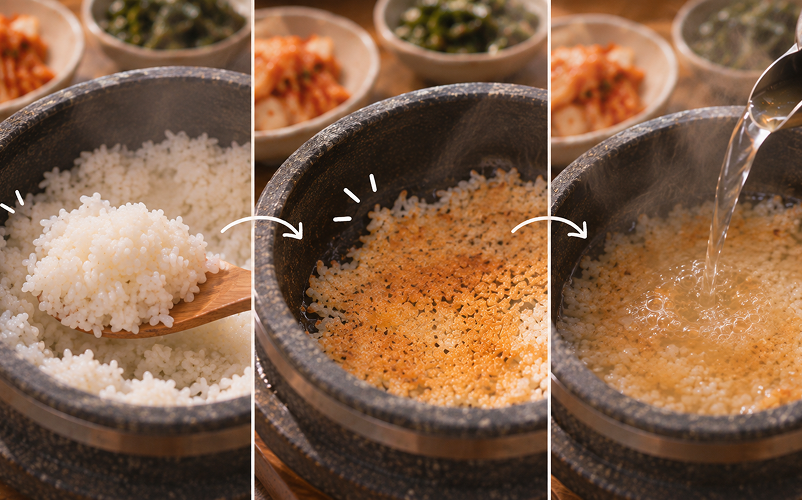
Hot water loosens the rice crust and draws out its toasted flavor. After a short wait, the water becomes sungnyung. You can sip the warm liquid and eat the softened grains with a spoon. The pot’s retained heat does much of the work; the restaurant is not necessarily cooking a second batch of rice.
The Korea Tourism Organization describes this step with hot stone pot rice: serve the rice, then pour hot water over the crispy layer remaining below. At a Jeju restaurant featured in its food travel guide, diners are advised to scoop out the rice and abalone, add warm water to the emptied pot, and let the scorched rice soak.
If a restaurant brings you a small pot of rice and a separate container of water, look inside before the server clears anything away. Those browned grains are likely your last course.
Nurungji or Sungnyung: Which Are You Eating?
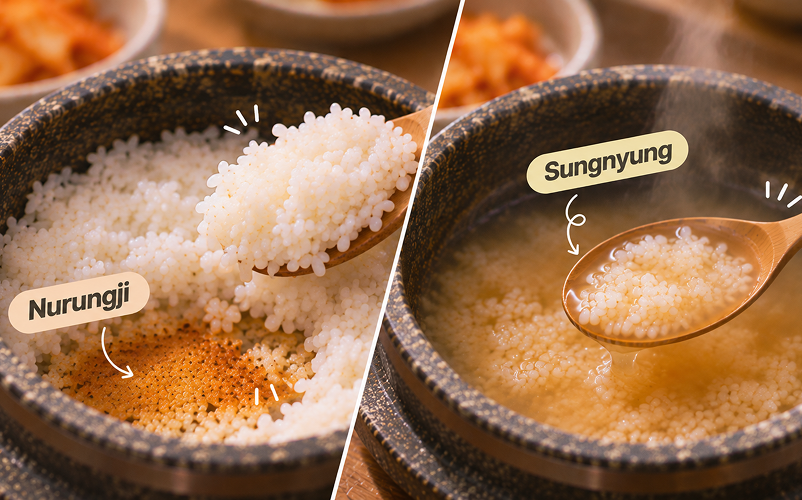
The names describe two related experiences:
Nurungji is the browned rice itself. Eat it crisp for a crackly, toasted snack.
Sungnyung is what you get after adding water and letting the rice infuse it. Drink the liquid and spoon up the softened rice.
There is no need to pick a favorite. Some people enjoy a few crunchy pieces first and add water to what remains. The change in texture is the pleasure: one pot offers soft rice, crisp rice, and a warm finish.
Can You Make Korean Scorched Rice at Home?
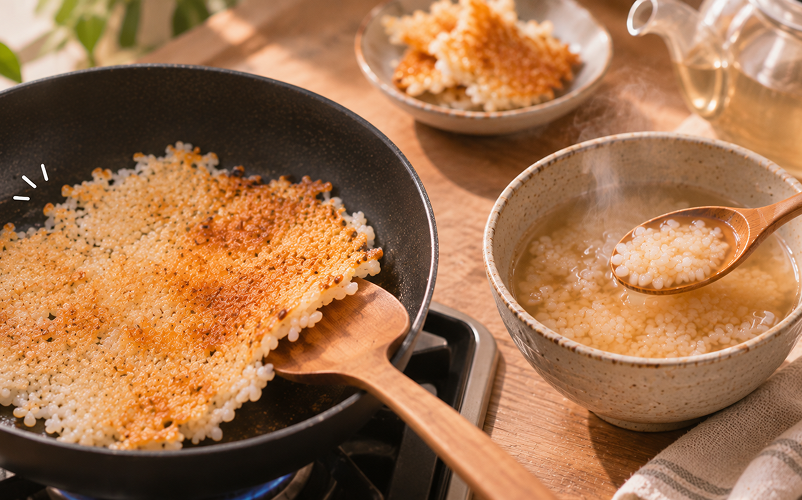
You do not need a stone pot to try the crunchy version. Spread a thin, even layer of cooked rice in a pan, press it down gently, and heat it over low heat until the underside turns golden and releases a toasted aroma. Watch it closely: the aim is browned rice, not a blackened crust. Let it cool slightly before lifting it out.
A Korea.net writer’s first attempt at making nurungji uses leftover rice spread across a pan. For sungnyung, place pieces of finished nurungji in hot water and let them soften. You can make this version even if your everyday rice cooker never leaves a crust.
Next time the rice disappears from a Korean stone pot, wait before calling the meal finished. The pot is holding on to one more taste—and the water is how you get to it.
 Free Shipping Over
 Ships From Korea


 전체 카테고리
 Trending Searches 🔥





 ARAB EMIRATES
 AUSTRALIA
 BELGIUM
 BRAZIL
 CANADA
 DENMARK
 FINLAND
 FRANCE
 GERMANY
 GREECE
 HONG KONG
 IRELAND
 ITALY
 JAPAN
 MACAO
 MALAYSIA
 MEXICO
 MONACO
 NETHERLANDS
 NEW ZEALAND
 NORWAY
 PHILIPPINES
 QATAR
 RUSSIAN
 SAUDI ARABIA
 SINGAPORE
 SWEDEN
 SWITZERLAND
 TAIWAN
 THAILAND
 UNITED KINGDOM
 VIET NAM


