
If you ever watched a Korean drama, you probably came
across the scenes where people are drinking alcohol under red tent on a cold
winter night. This is a common scene that exists almost in every k-drama about
everyday life and that’s where characters often go to share both their sorrows
and their moments of happiness. This red tent is called “pojangmacha”.

Image courtesy of MBC (She Was Pretty)
Pojangmacha is a type of food stall in Korea that
sells various street food. Pojangmacha stalls first began to appear in the
1950s around the Cheonggyecheon area in Seoul. The first pojangmacha stalls were
quite different from the modern ones. They were usually small cars and carts, which
sold small snacks and drinks. However, the concept remained similar, and even these
days, when there are so many modern restaurants, pojangmacha stalls still remain
a representative symbol of Korea’s food culture.
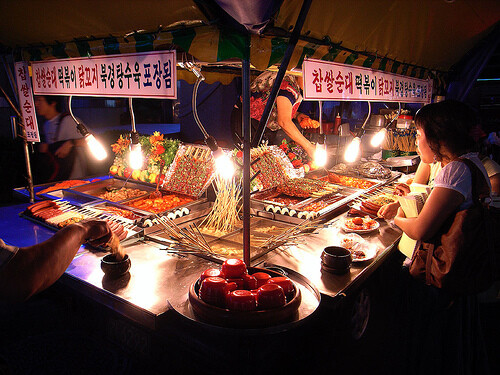
Image courtesy of superlocal at flickr
That’s why, if you're planning to visit Korea, trying
the pojangmacha experience is highly recommended. It offers not just a glimpse
into Korean culture and the lives of locals, but it’s also likely to become one
of your best meals in the country!
And if you're hesitant about trying unfamiliar food,
let me introduce some of the popular dishes commonly sold at pojangmacha.
Golbaengi muchim (Sea snail salad)
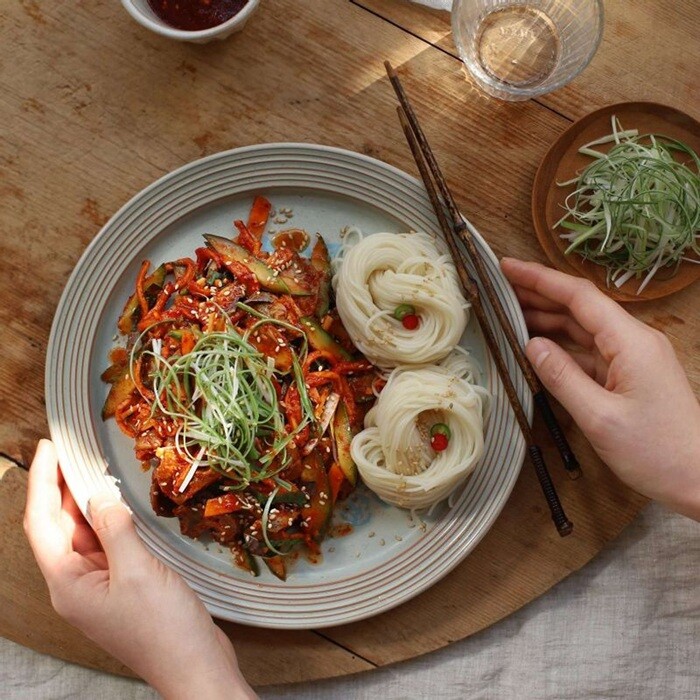
Image courtesy of 우리의 식탁
Golbaengi muchim (골뱅이 무침) is a dish
made with sea snails and vegetables as the main ingredients, offering a unique
and flavorful taste. This dish pairs perfectly with cold beer or a glass of
soju, making it a popular choice for many. When somen noodles are combined with
the sea snails and coated in a spicy gochujang-based sauce, the result is a
harmonious blend of bold flavors. To enhance the chewy texture, dried squid
strips are added, providing an additional layer of texture and taste. Together,
these ingredients create a delicious and satisfying dish that is especially
enjoyed as a comforting winter food.
Yachae gopchang (Vegetable tripe)
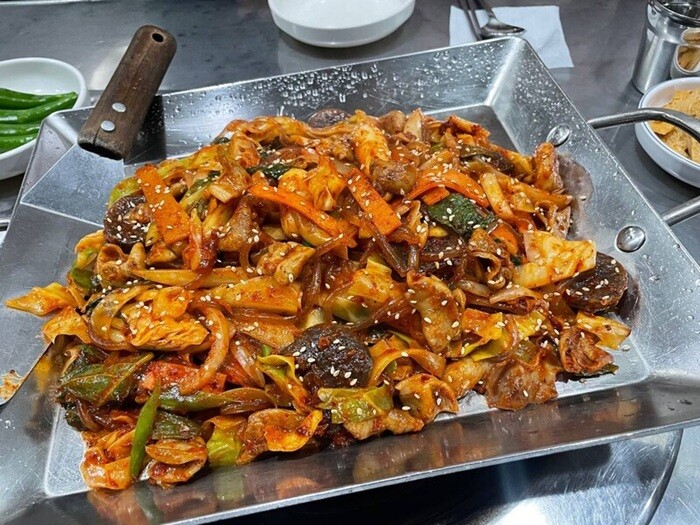
Image courtesy of 놀란곱창
Yachae
gopchang (야채 곱창) is a savory dish made by stir-frying
pork gopchang (pork tripe) with a variety of vegetables such as cabbage,
onions, perilla leaves, and green onions. This dish is a flavorful combination
of tender gopchang and crisp vegetables, creating a satisfying balance of
textures. In some variations, rice cakes or glass noodles are added, further
enriching the dish. To enhance the depth of flavor, perilla powder and perilla
oil are used, giving the dish a unique, nutty taste.
Tip: If you
have any leftovers, you can transform the gopchang into a delicious bokkeumbap
(fried rice). Simply add rice, seaweed, sesame oil, and sesame seeds to create
a tasty and comforting meal out of the remnants.
Tteokbokki
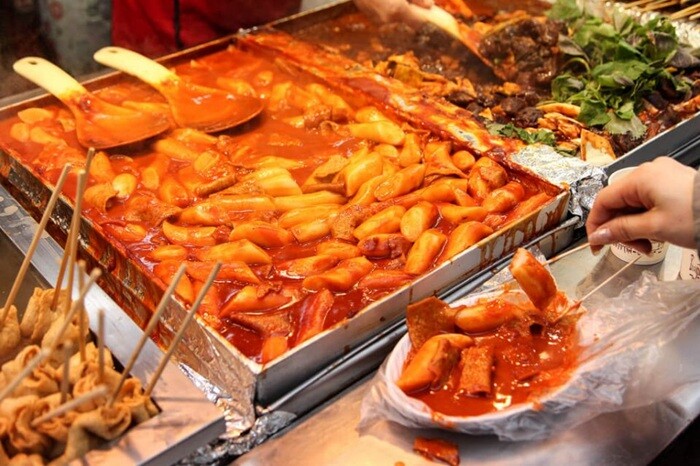
Image courtesy of gody.vnvn
Tteokbokki
(떡볶이) is one of Korea’s most beloved street foods, known
for its irresistible combination of chewy rice cakes and a spicy-sweet sauce.
The dish features cylindrical rice cakes, called tteok, simmered in a
rich, flavorful gochujang-based sauce, which gives it a perfect balance of heat
and sweetness. Tteokbokki is often served with fish cakes (eomuk), hard-boiled
eggs, and sometimes even a sprinkling of sesame seeds or chopped green onions for
added flavor. The dish is comforting and satisfying, making it a go-to snack
for people of all ages, especially on chilly days or late nights. In some
variations, you might also find it paired with ramen noodles or cheese, further
enhancing its texture and flavor. Whether enjoyed at a pojangmacha or a casual
restaurant, tteokbokki is an essential part of Korean food culture that never
fails to deliver a delicious experience.
Bindaetteok (Mung bean pancake)
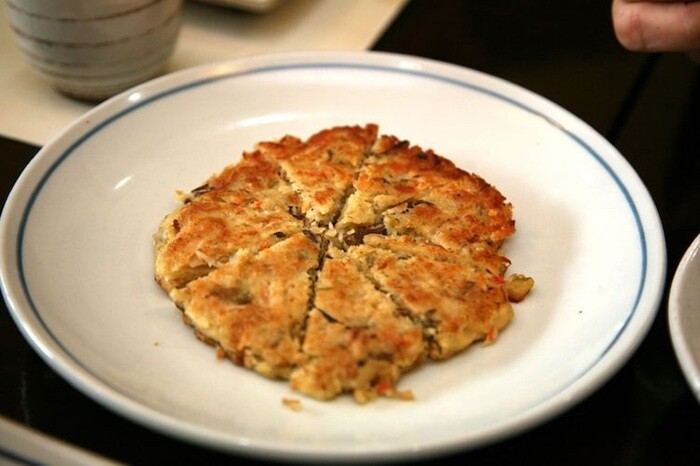
Image courtesy of TasteAtlas
Bindaetteok
(빈대떡) is a traditional Korean dish that’s both crispy and
savory, often enjoyed as a snack or side dish at pojangmacha stalls. Made from
ground mung beans, the batter is mixed with vegetables like onions, carrots,
and kimchi, then fried until golden brown and crispy on the outside, while
remaining soft on the inside. Some variations also include pork or beef to add
a savory depth to the flavor. The dish is typically served with a side of
dipping sauce made from soy sauce, vinegar, and chili, which complements the
rich taste of the pancake. Bindaetteok is especially popular during the colder
months, as its warm, comforting texture makes it the perfect dish to enjoy with
a cup of makgeolli (Korean rice wine) or soju. Its hearty and satisfying nature
has made it a beloved part of Korean street food culture.
Eomuk (Fish cakes)
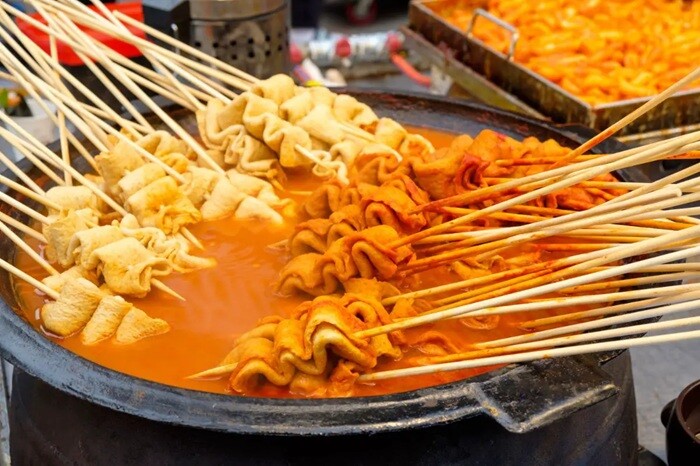
Image courtesy of LindaGoesEast
Eomuk (어묵), also known as odeng, is a popular Korean street food made of fish
cakes. The dish consists of skewered, rectangular or oval-shaped pieces of fish
cake, often served in a warm, savory broth. The fish cakes themselves are made
from a mixture of fish paste, starch, and various seasonings, creating a soft,
chewy texture. Eomuk is typically served with a cup of its flavorful broth,
which is lightly seasoned with soy sauce and sometimes a touch of chili. It’s a
comforting and satisfying snack, perfect for chilly days or a quick bite while
wandering the streets. In addition to its street food popularity, eomuk is also
commonly found in home kitchens, where it’s used in stews or soups. This humble
yet delicious dish has become an integral part of Korean food culture, enjoyed
by people of all ages.
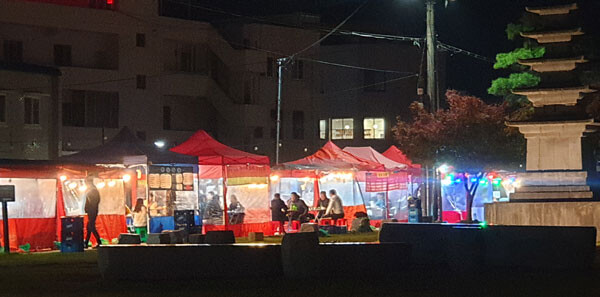
Image courtesy of Gongju
City Press Association
In addition
to the popular dishes, let me also introduce a couple of popular pojangmacha
streets! Jongno 3-ga Pojangmacha Street in Seoul is a great place to visit, and
if you are taking subway line 5 to Jongno 3-ga station and exit from exits 3, 4,
5 or 6 you will find a row of pojangmachas lined down the street.
Another
great spot is Yeongdo Pojangmacha street in Busan, where you can enjoy your
favorite street foods and pojangmacha atmosphere next to a beautiful ocean
view.
Whether you're a foodie or just looking to immerse
yourself in local culture, experiencing a pojangmacha is a must during your
visit to Korea!
 Free Shipping Over
 Ships From Korea


 전체 카테고리
 Trending Searches 🔥


 ARAB EMIRATES
 AUSTRALIA
 BELGIUM
 BRAZIL
 CANADA
 DENMARK
 FINLAND
 FRANCE
 GERMANY
 GREECE
 HONG KONG
 IRELAND
 ITALY
 JAPAN
 MACAO
 MALAYSIA
 MEXICO
 MONACO
 NETHERLANDS
 NEW ZEALAND
 NORWAY
 PHILIPPINES
 QATAR
 RUSSIAN
 SAUDI ARABIA
 SINGAPORE
 SWEDEN
 SWITZERLAND
 TAIWAN
 THAILAND
 UNITED KINGDOM
 VIET NAM


